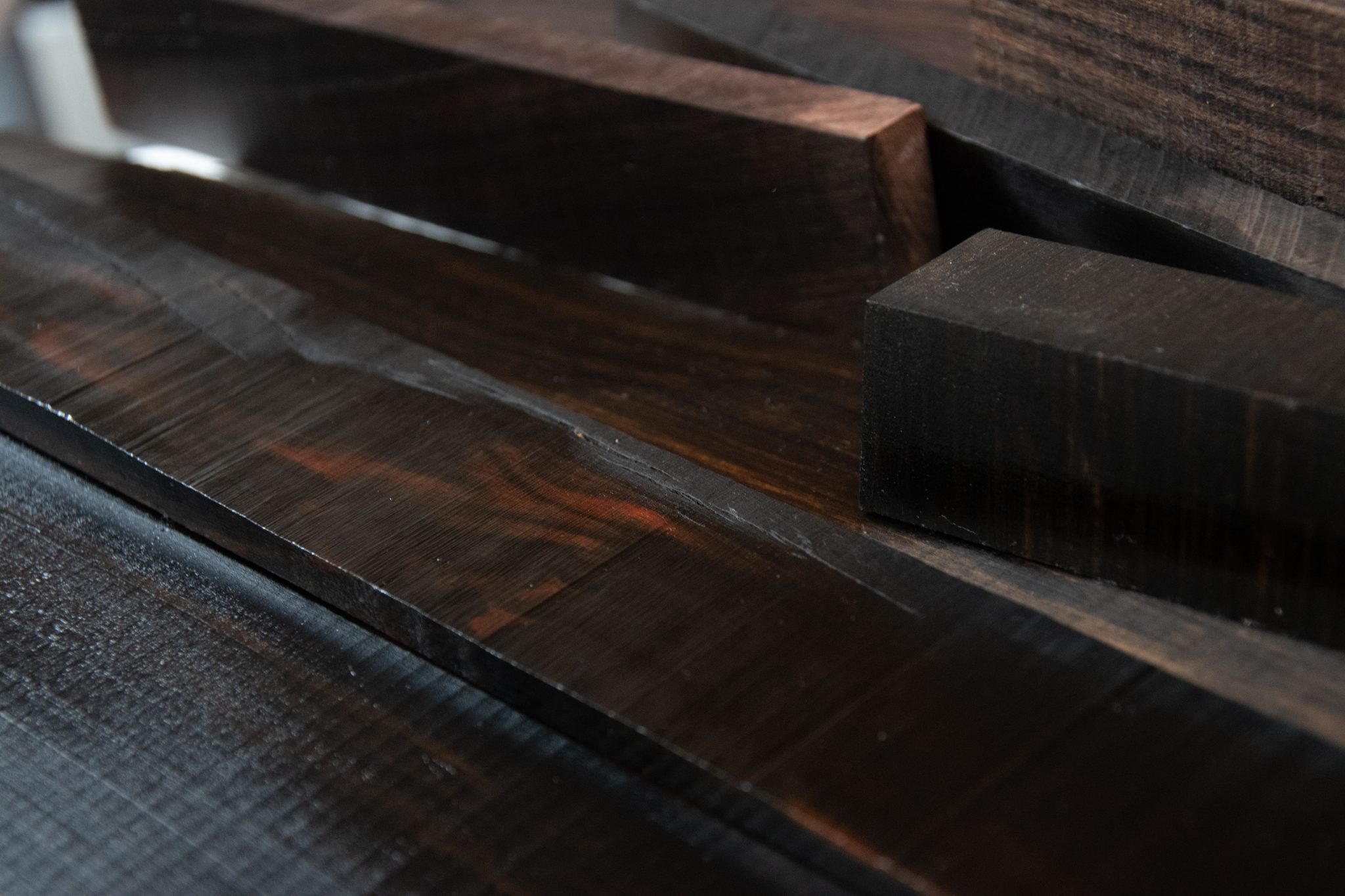
Domestic & exotic hardwoods
The Wood
Our Curated Library
Every piece starts with the tree.
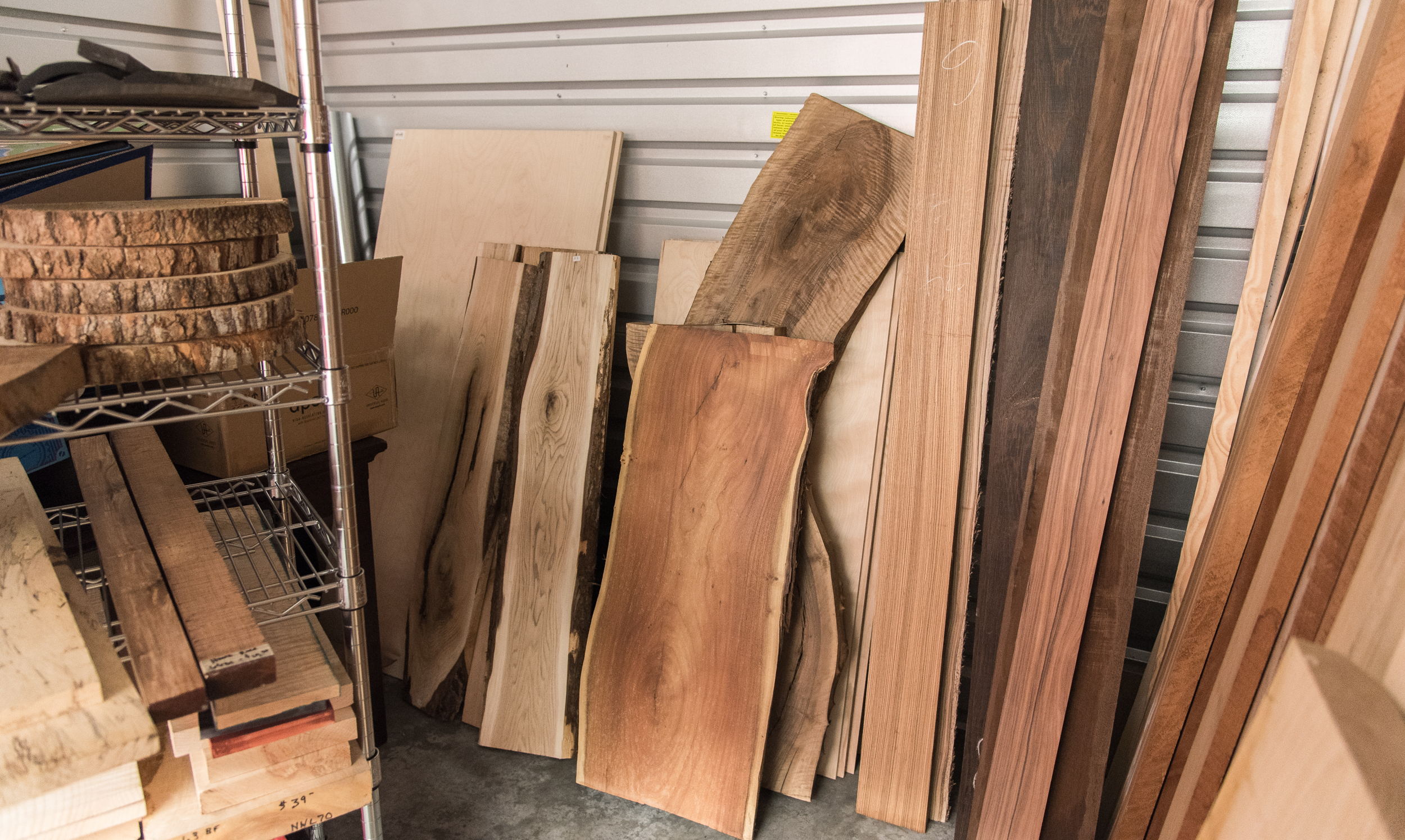
Every board in our shop is chosen by hand for its color, grain and character, and every species below is one we keep in stock, ready to build with. This guide walks through the domestic and exotic woods in our library and what makes each one different. Each listing also includes its Janka hardness: the force, in pounds, needed to press a small steel ball halfway into the wood. The higher the number, the better it resists dents and dings.
Rare combinations
When nature doubles down.
Figure doesn’t always arrive one at a time. Now and then a single board carries two at once: curl rippling through ambrosia maple, spalting laced with birdseye, or quilt rolling across claro walnut. Each figure is uncommon on its own. Finding them together is rarer still, and those are the boards we treasure most. We set them aside in The Vault, our small collection of one-of-a-kind boards.
Domestic
North American hardwoods.
Grown across the United States, from the Midwest forests around our shop to the orchards of California.
Walnut
The heart of mid-century design. Rich, warm and easy to live with.
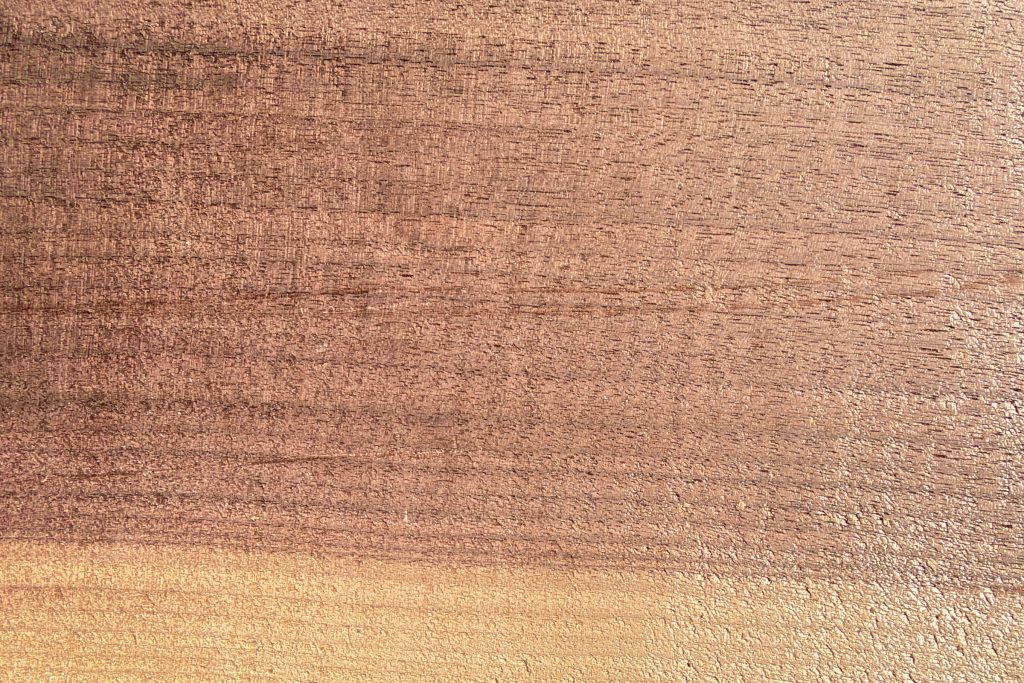
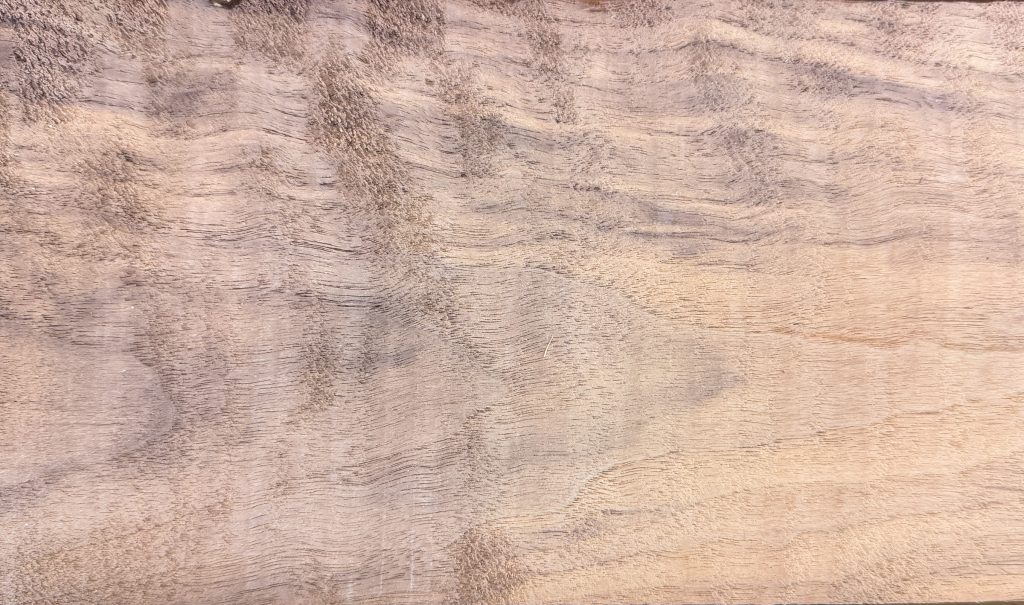
Black Walnut
Janka hardness: 1,010 lbf
Grown across the eastern U.S., including here in Indiana. Rich chocolate-brown heartwood, sometimes with hints of purple or gray, and a mostly straight, even grain. Over time it mellows to a warmer, slightly golden brown.
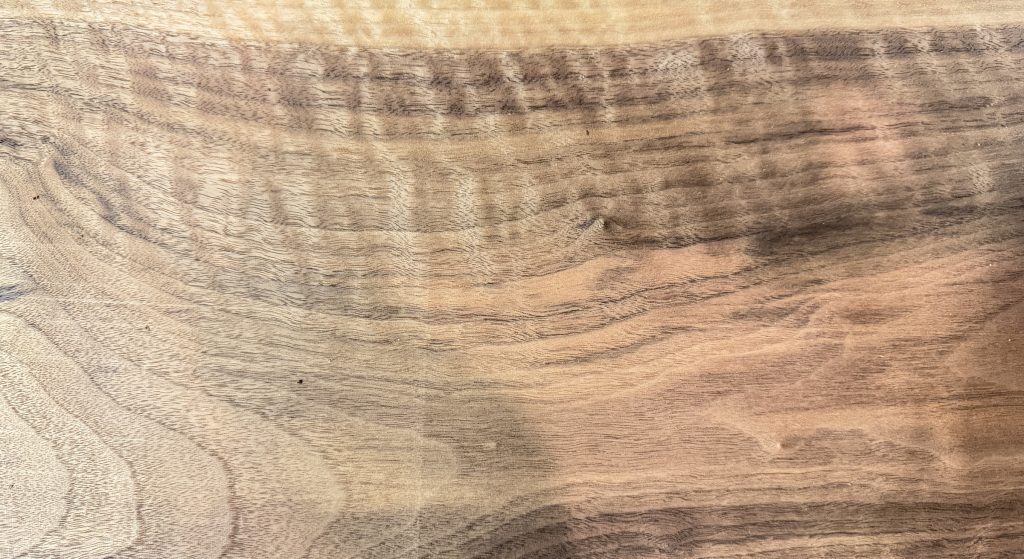
Curly Walnut
Janka hardness: 1,010 lbf
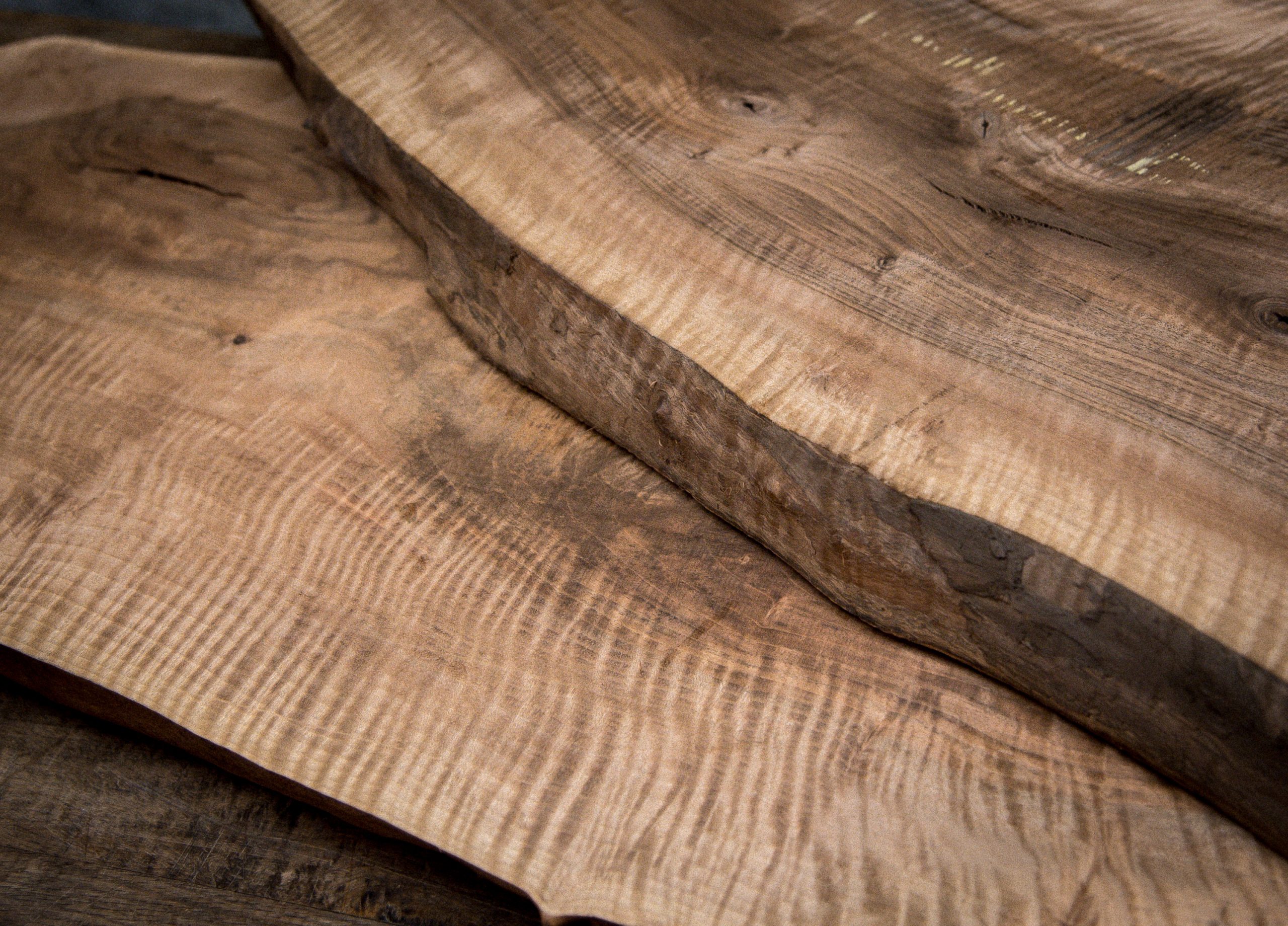
Black walnut with a ripple running through the grain. The fibers grow in waves, so the surface shimmers in bands that shift as you move around the piece. It’s uncommon and tricky to work, which is exactly what makes it special.
Claro Walnut
Janka hardness: 1,130 lbf
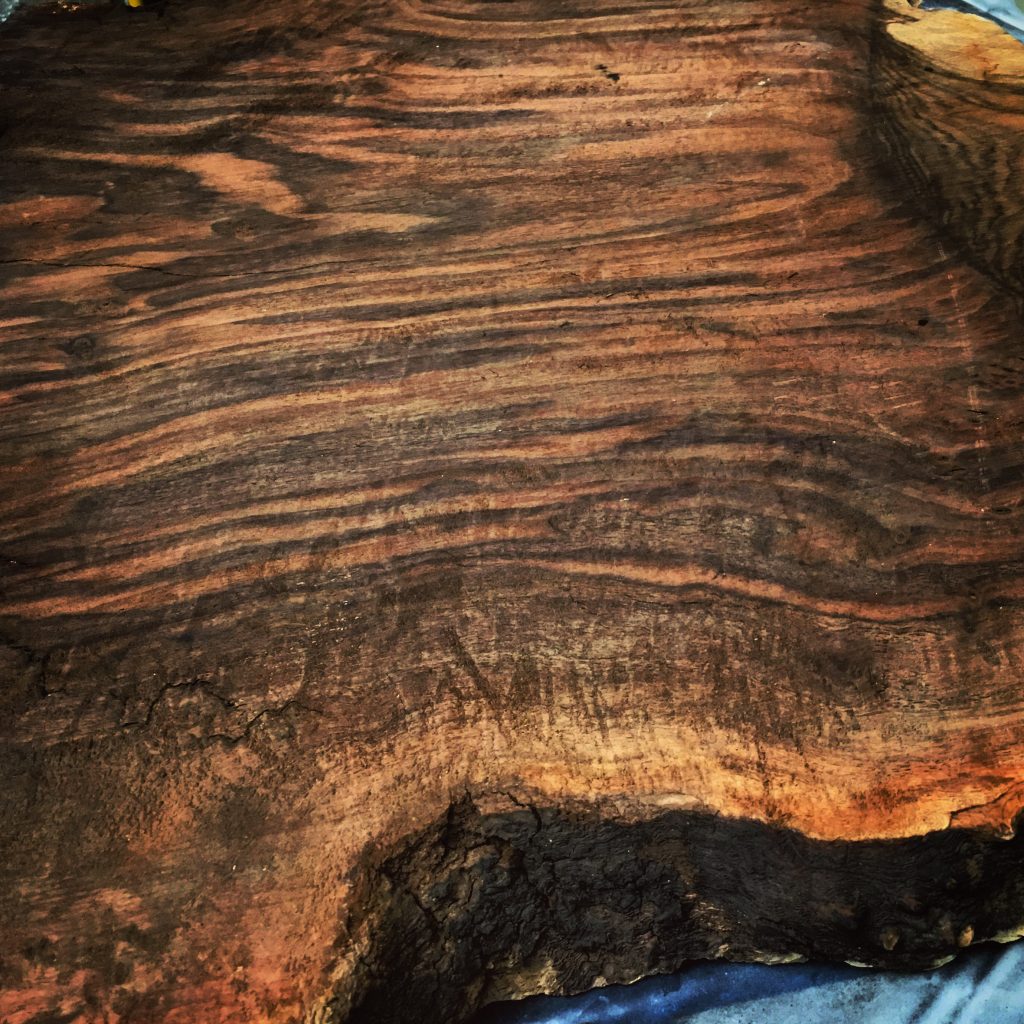
A California walnut, often grown as rootstock in walnut orchards. It carries more color than black walnut, with golds, reds and deep browns, and some of the boldest figure you’ll find, especially in large slabs and crotch sections.
Bastogne Walnut
Janka hardness: 1,250 lbf
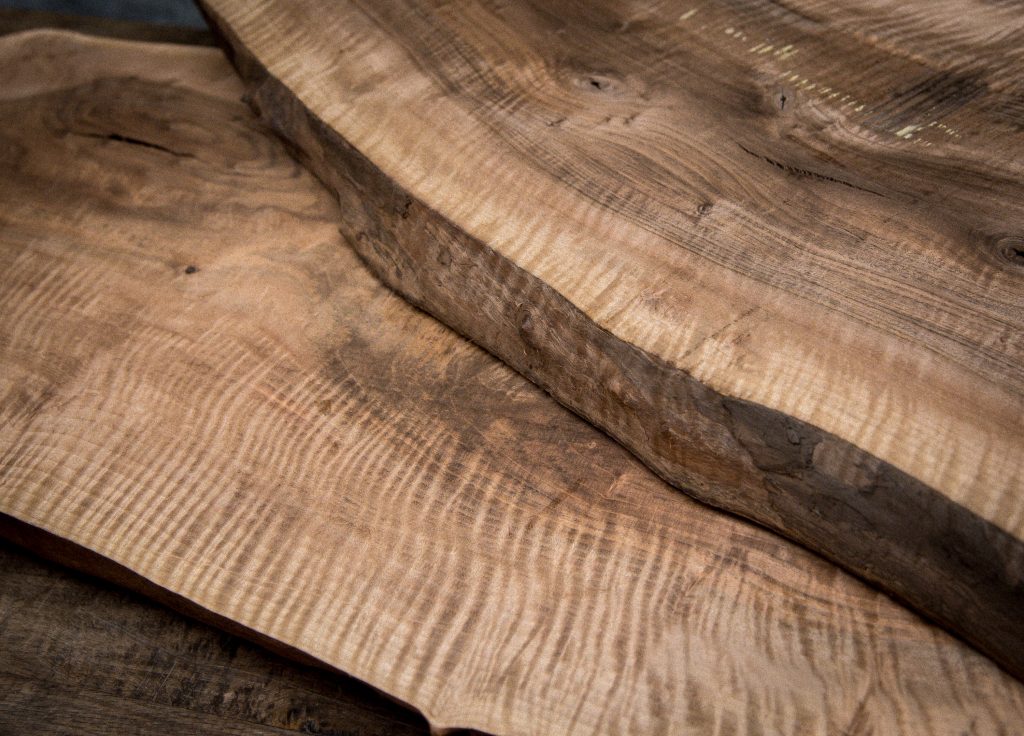
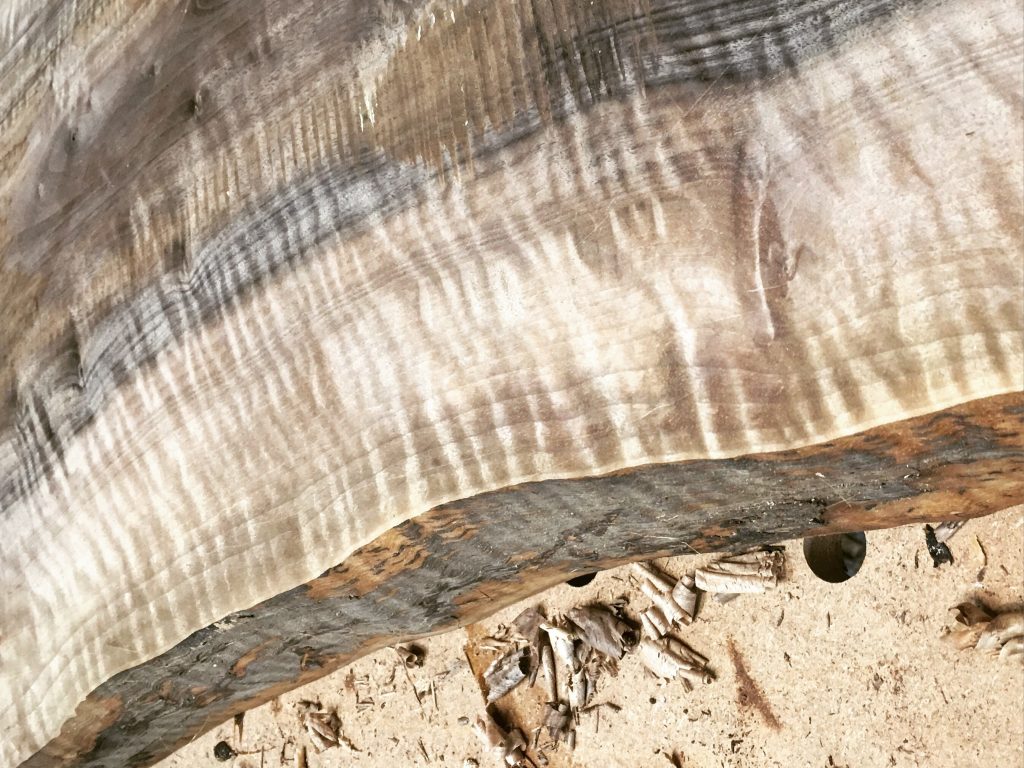
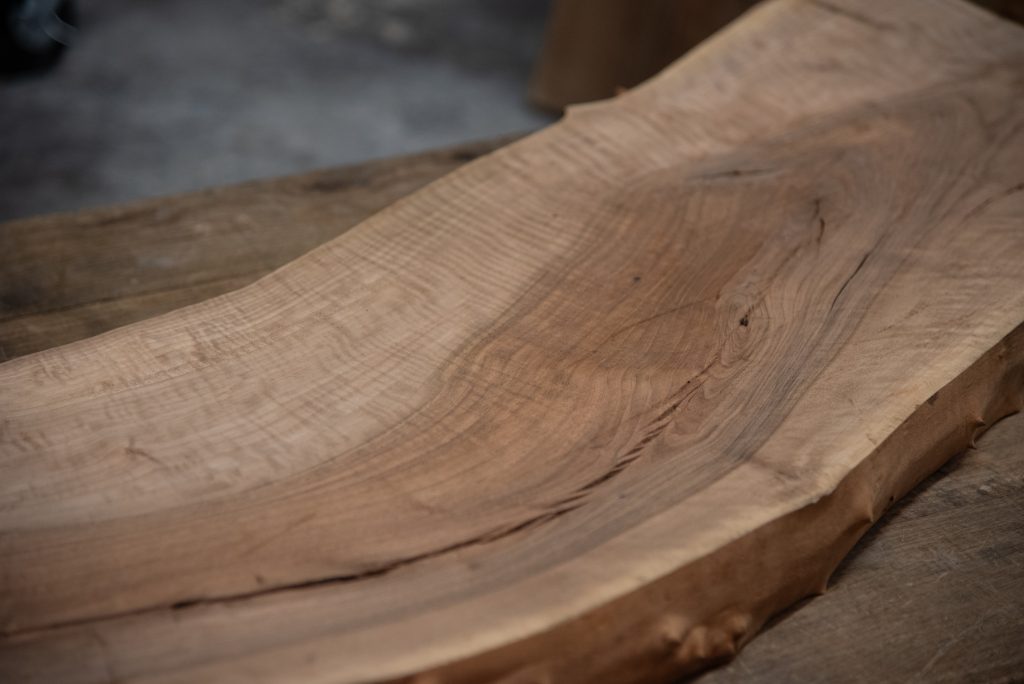
A rare hybrid of claro and English walnut from California. Denser and finer-textured than claro, it ranges from golden to reddish brown with darker streaks and frequent curl, and it finishes to a silky, almost glassy surface.
Oak
The backbone of the Arts & Crafts movement. Strong, honest and built to last, it’s the defining wood of Craftsman and Mission furniture.
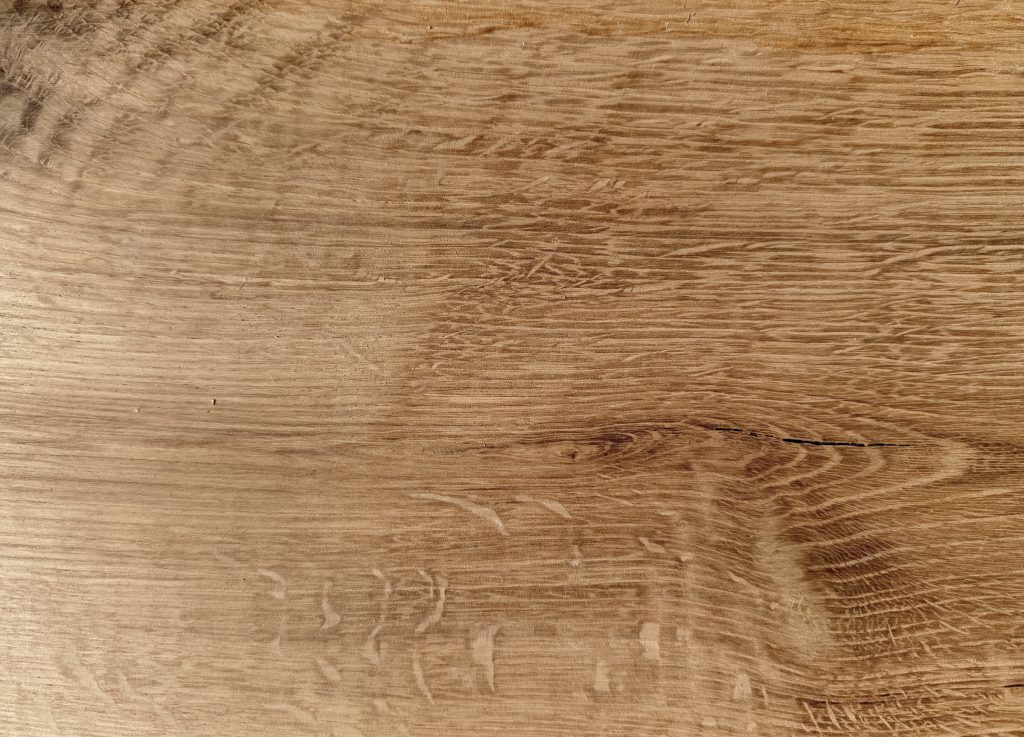
White Oak
Janka hardness: 1,350 lbf
Strong and golden tan, with closed pores that make it naturally water-resistant. It’s the wood of whiskey barrels. Quartersawn boards show a beautiful shimmering ray fleck, and it’s a mid-century staple.
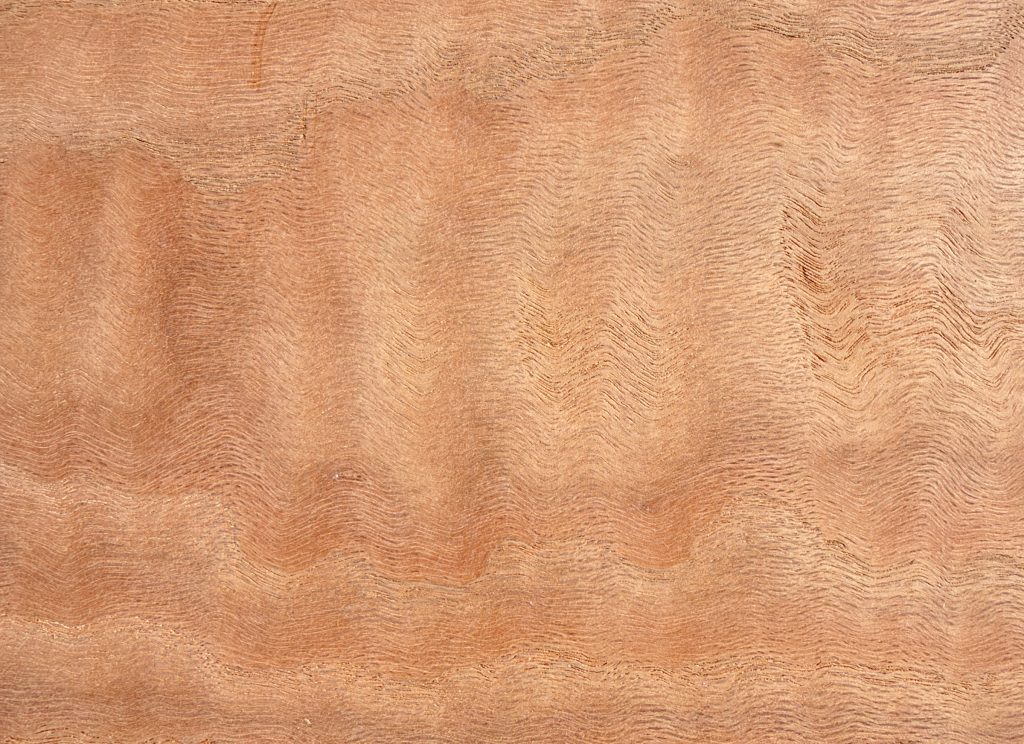
Red Oak
Janka hardness: 1,220 lbf
Warmer and pinker than white oak, with a bold, open grain that gives it more texture. Durable and classic, and a great value for larger pieces.
Maple
Bright, clean and tough. Maple has been the wood of butcher blocks, workbenches and fine instruments for centuries, and its tiger-striped boards have graced American furniture since Colonial times.
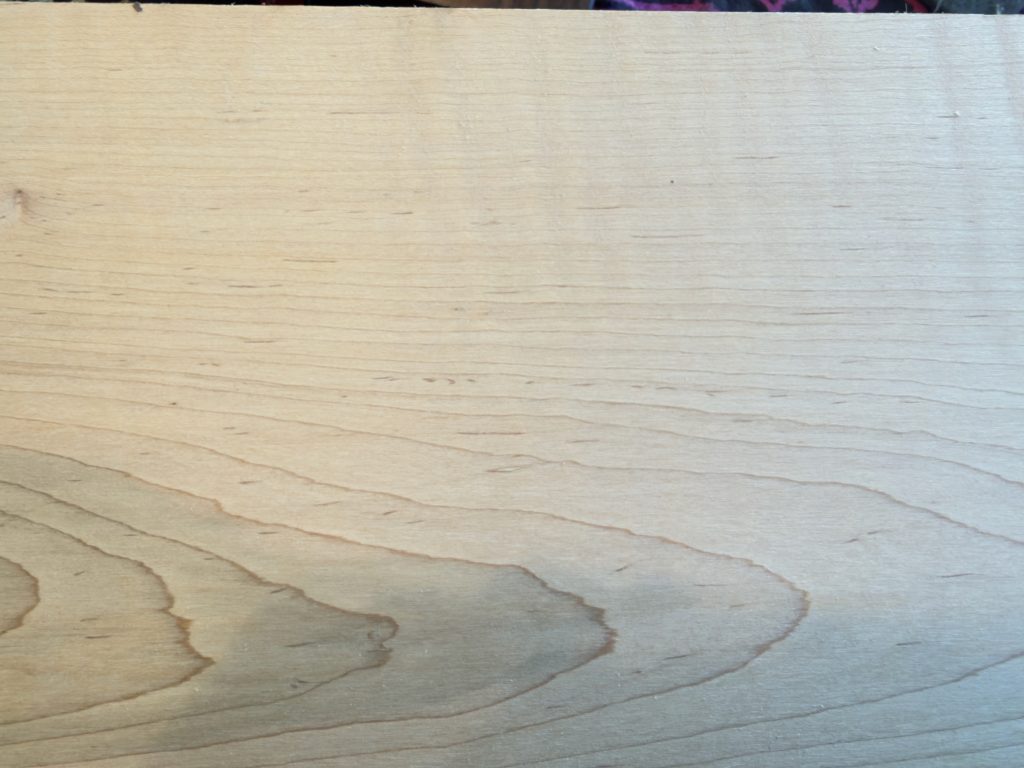
Hard Maple
Janka hardness: 1,450 lbf
Creamy, pale and very hard, with a fine, even grain. It’s the go-to for cutting boards and surfaces that see daily use, and it ambers gently over time.
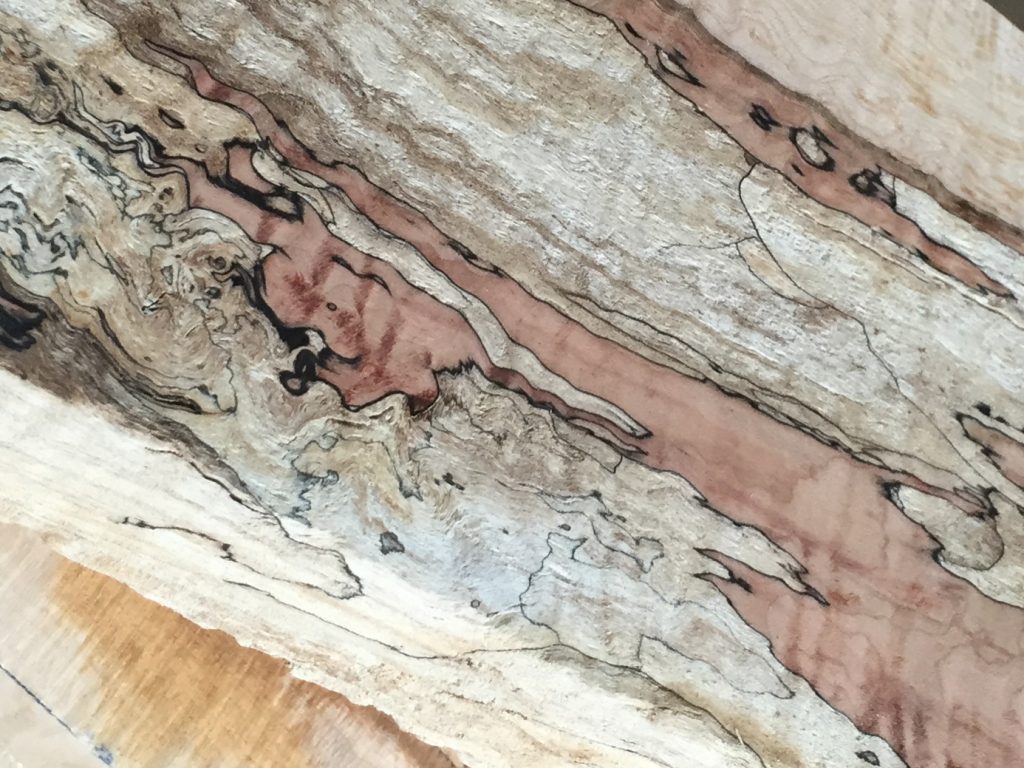
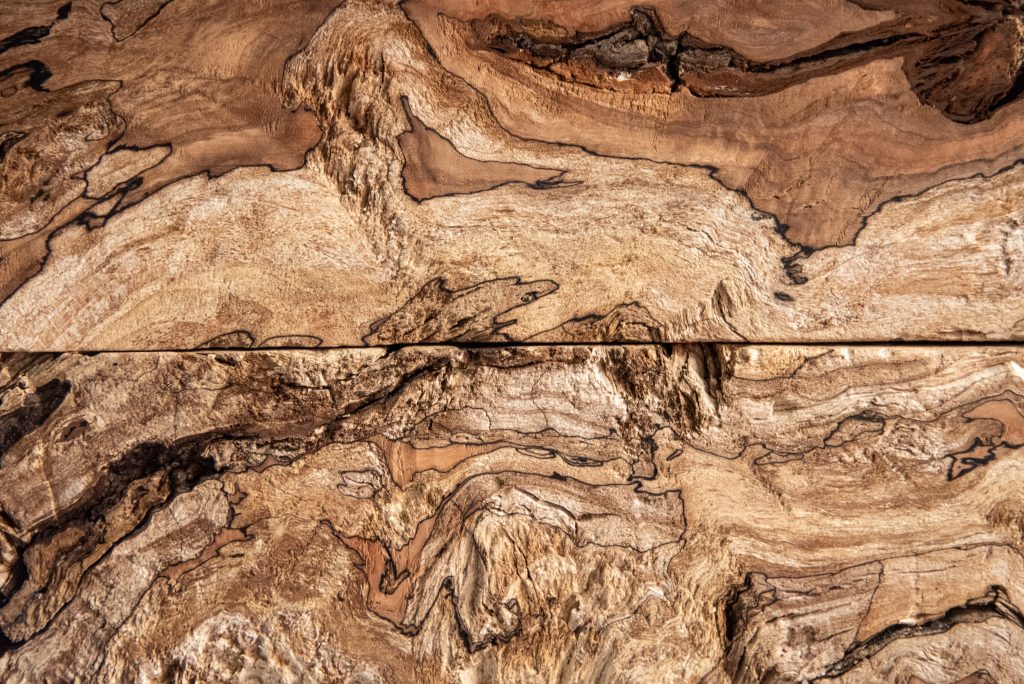
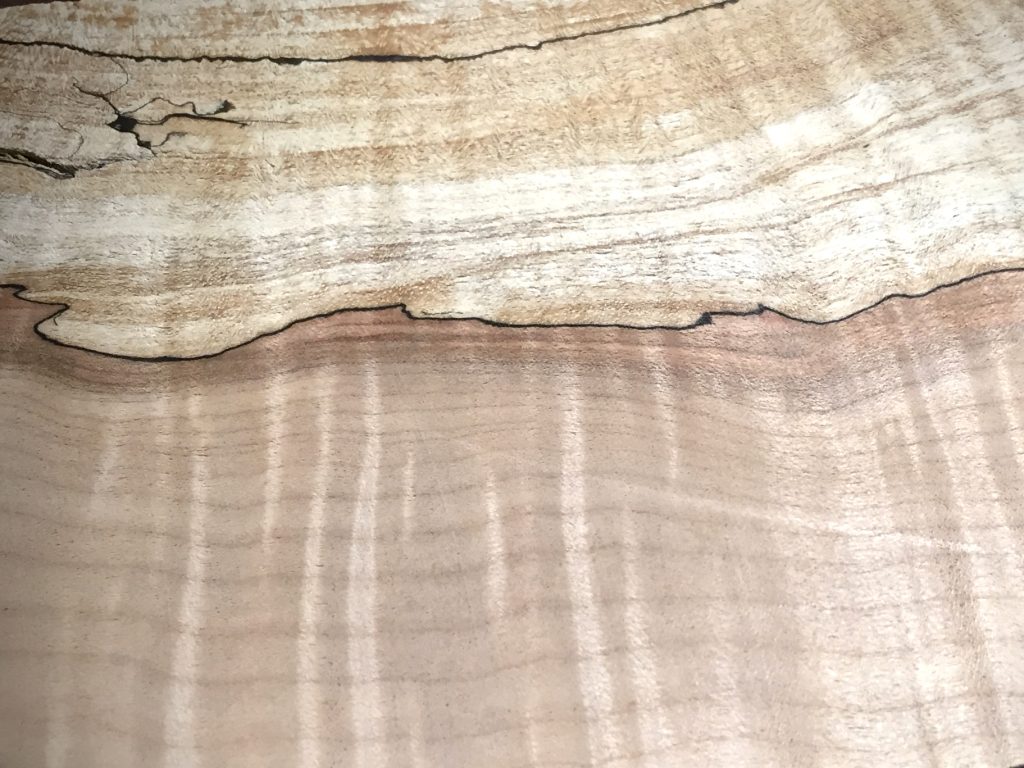
Spalted Maple
Janka hardness: about 950 lbf (varies)
Spalting happens when fungi begin to grow in the wood, drawing dark lines and patches of color through it. Drying the board stops the process, so every piece is a one-of-a-kind map. Spalting can soften the wood, so it shines in accents and decorative pieces.
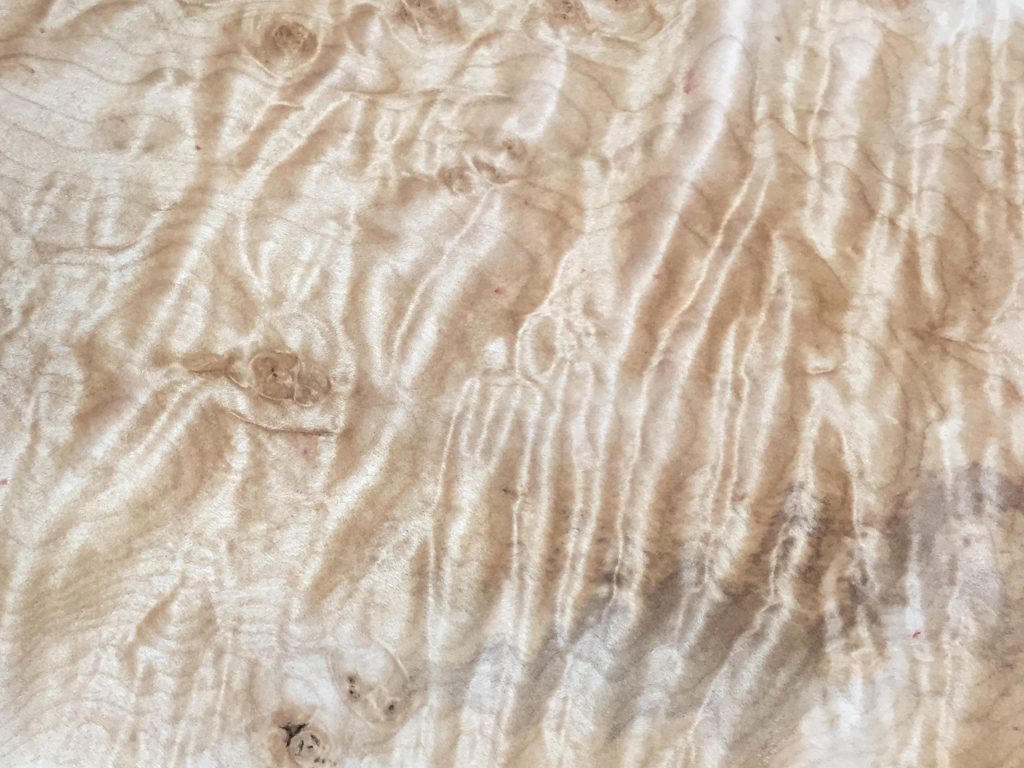
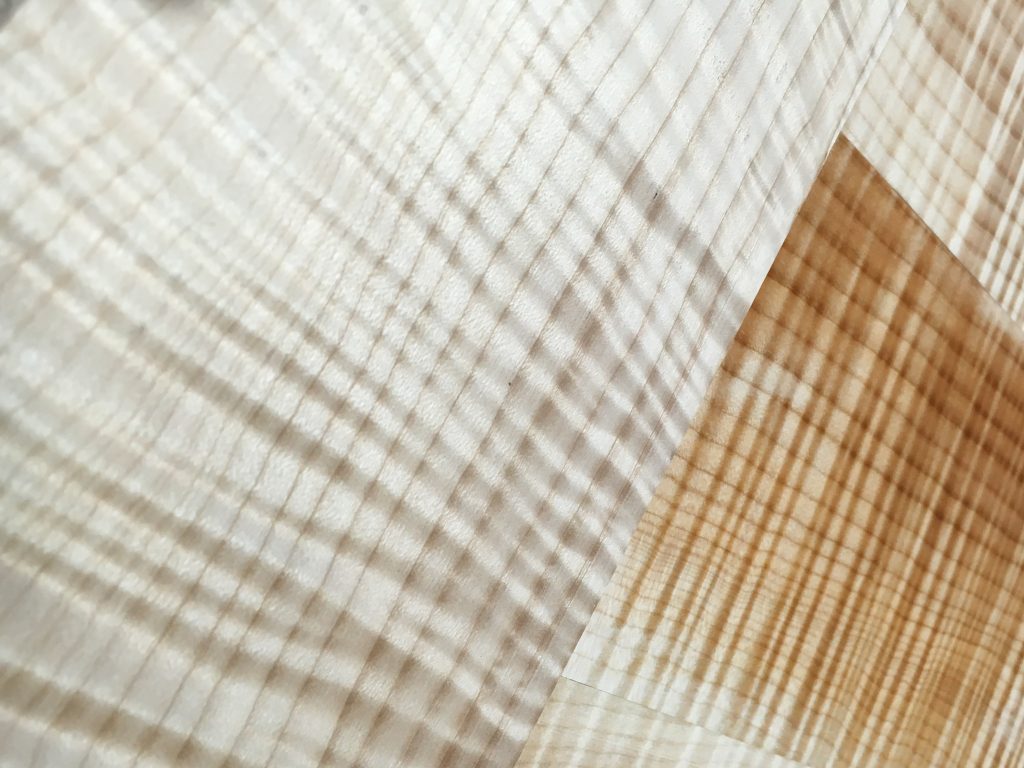
Curly Maple
Janka hardness: 950 lbf
Also called tiger or flame maple. Waves in the grain create a three-dimensional stripe that seems to move as the light changes. It’s the same figure prized on the backs of violins.
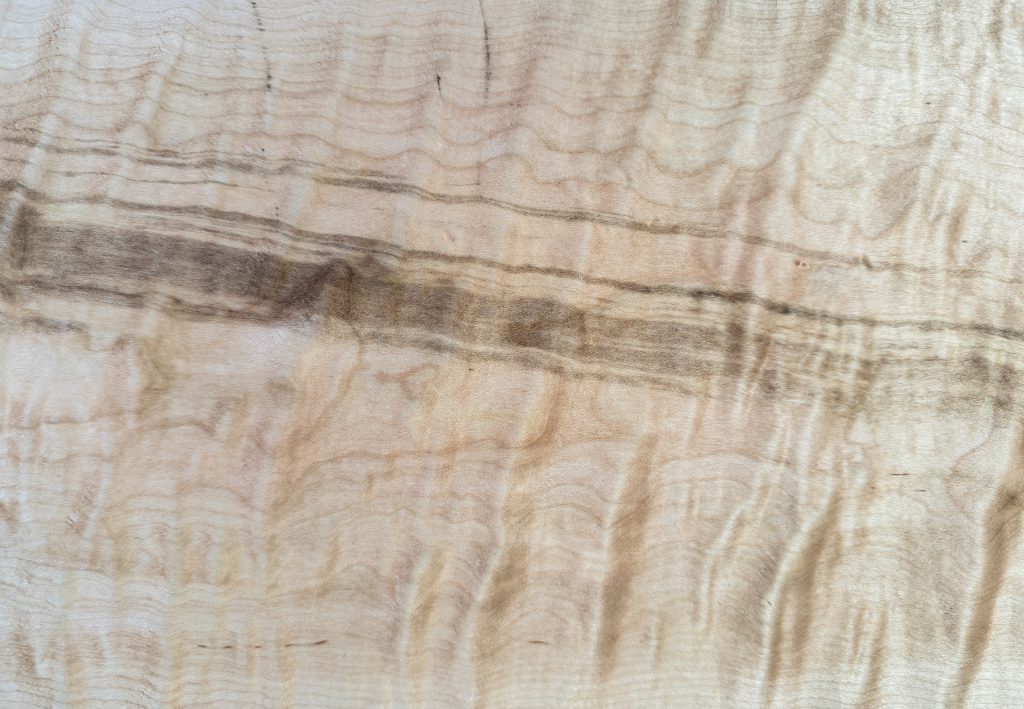
Quilted Maple
Janka hardness: 850 lbf
Mostly bigleaf maple from the Pacific Northwest. Where curly maple shows straight bands of stripes, quilted maple ripples in rounded, overlapping pillows, like clouds or water rising off the surface. The figure comes from wavy, undulating growth rings and shows up on flatsawn boards, so a log has to be cut just right to reveal it. It’s the same three-dimensional figure prized on high-end guitar tops, and a finish makes it come alive.
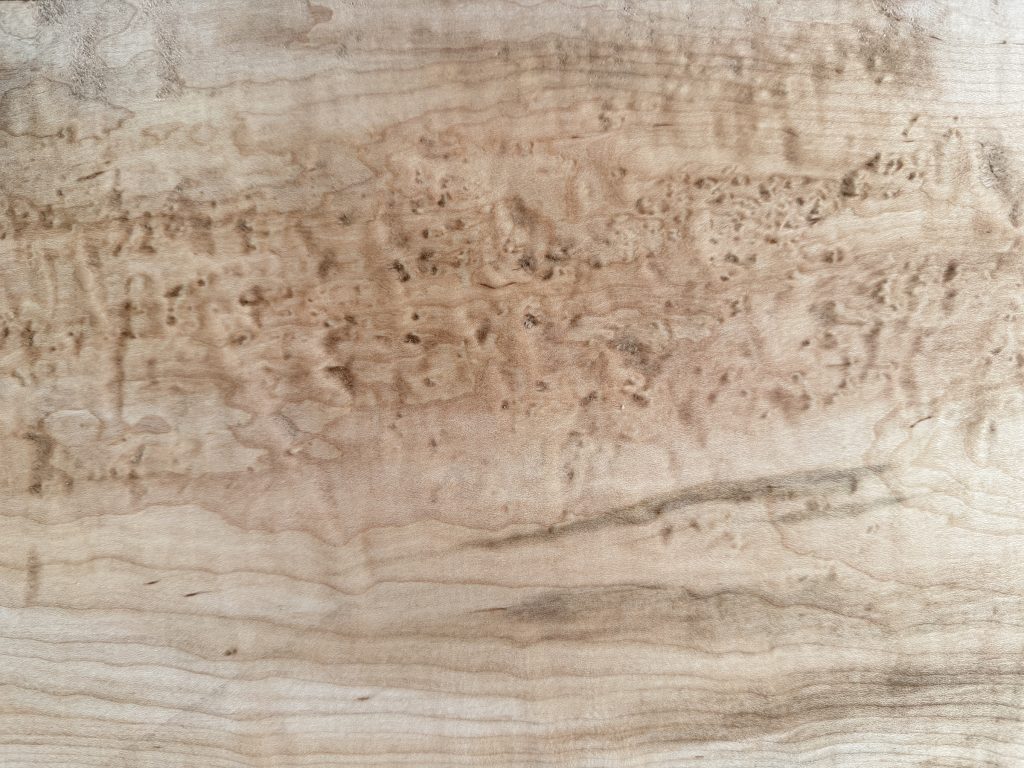
Birdseye Maple
Janka hardness: 1,450 lbf
Scattered with tiny swirling “eyes” whose cause is still a mystery. It grows almost exclusively in hard maple from the northern U.S. and Canada, and it’s rare and unmistakable.
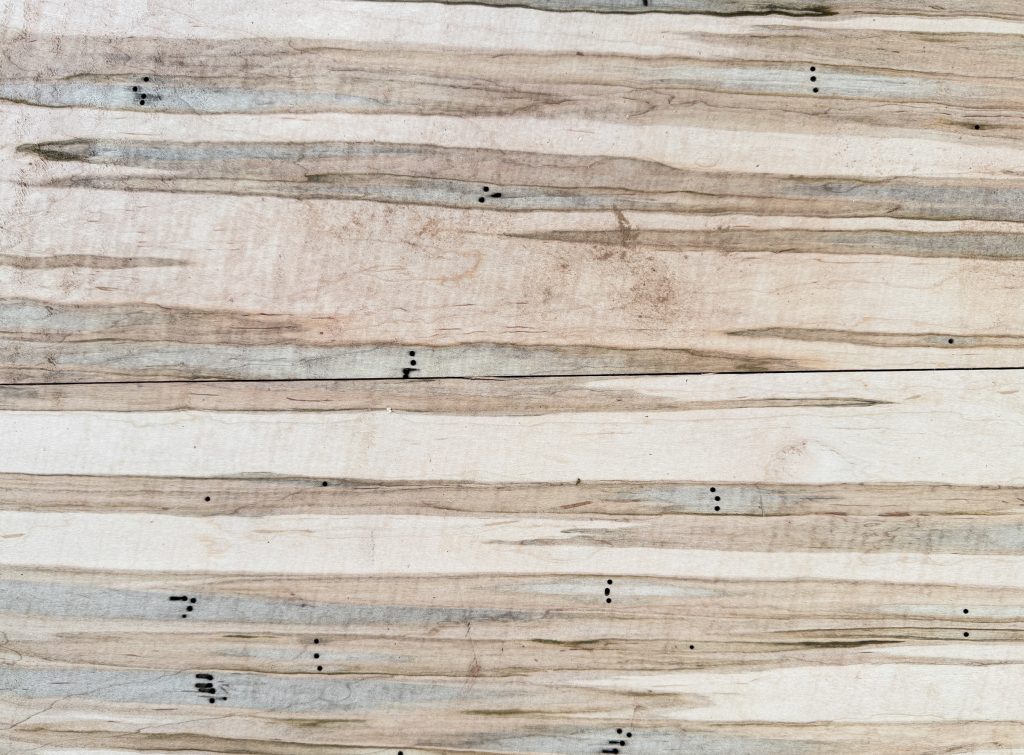
Ambrosia Maple
Janka hardness: 700–950 lbf
Soft maple with a collaborator. Tiny ambrosia beetles bore into the living tree, carrying a fungus that they farm for food inside their tunnels. As the fungus spreads, it stains the surrounding wood in streaks of gray, blue and brown that trail out from each small beetle hole. No two boards share the same pattern. Long overlooked as a defect, it’s now prized for its wild, organic character.
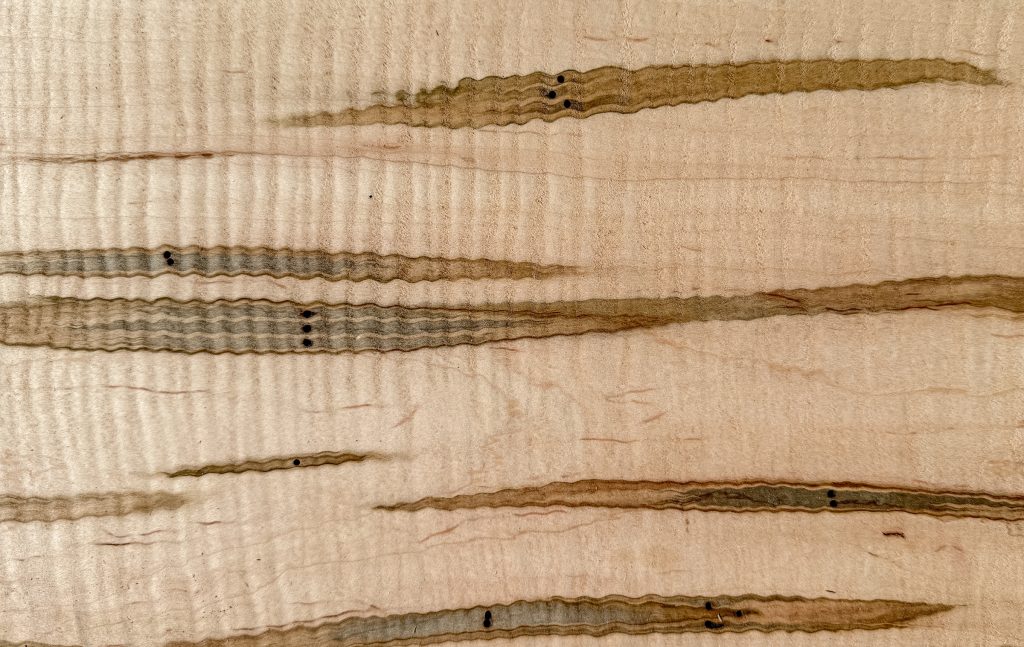
Quilted Ambrosia Maple
Janka hardness: 700–950 lbf
Our specialty maple, and the best of both worlds: rolling, three-dimensional quilted figure layered over the gray and brown streaks of ambrosia. It’s a rare combination, but one we keep in good supply, so it’s ready for full furniture builds as well as accents.
Cherry
The classic wood of Shaker and Early American furniture. Fine-grained and refined, it ages into a deep, glowing red-brown.
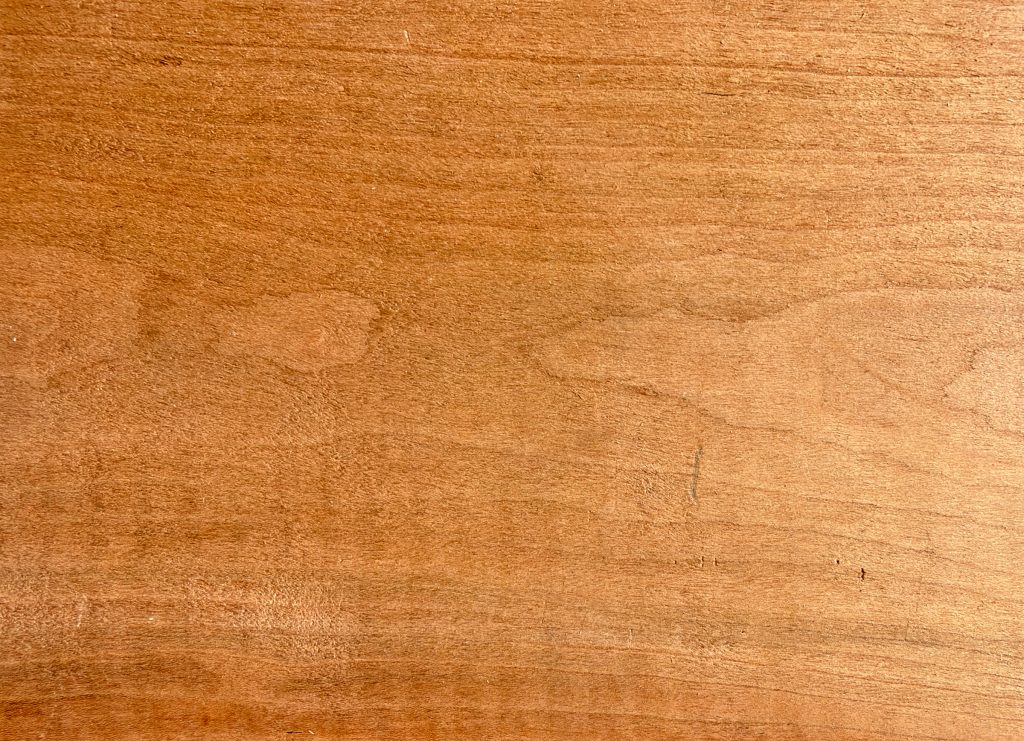
Cherry
Janka hardness: 950 lbf
Starts out a light pinkish tan and deepens to a rich reddish brown with exposure to light, aging beautifully over the years. Smooth, fine grain with a warm glow. We finish it naturally and let time do the rest.
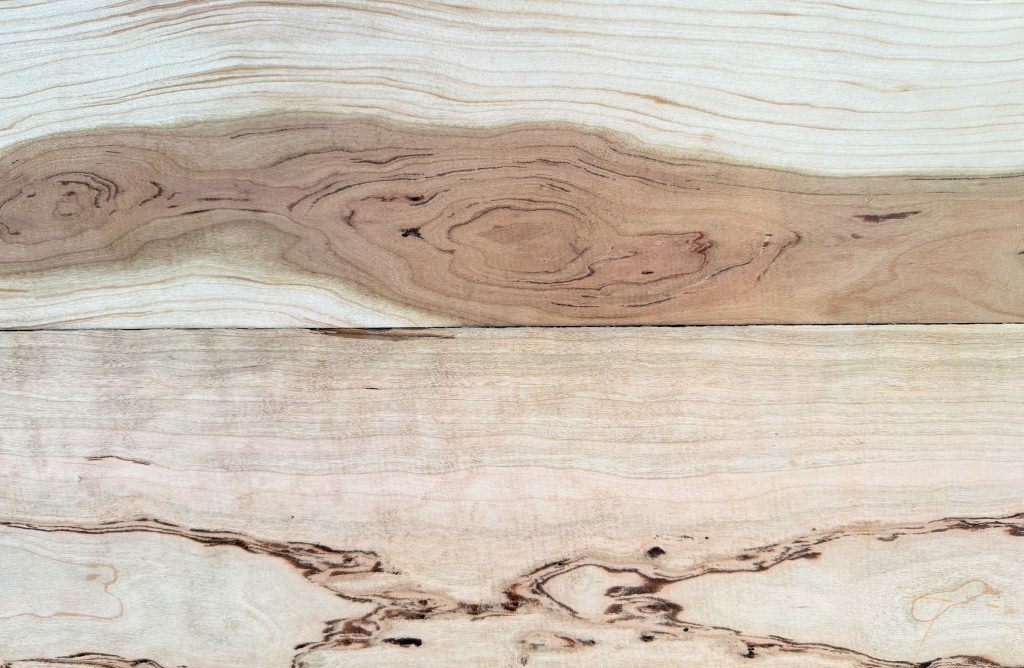
Gummy Cherry
Janka hardness: 950 lbf
Cherry with character. Dark gum flecks and streaks form where the tree sealed off an injury. Some see flaws. We see part of the tree’s story.
Hickory
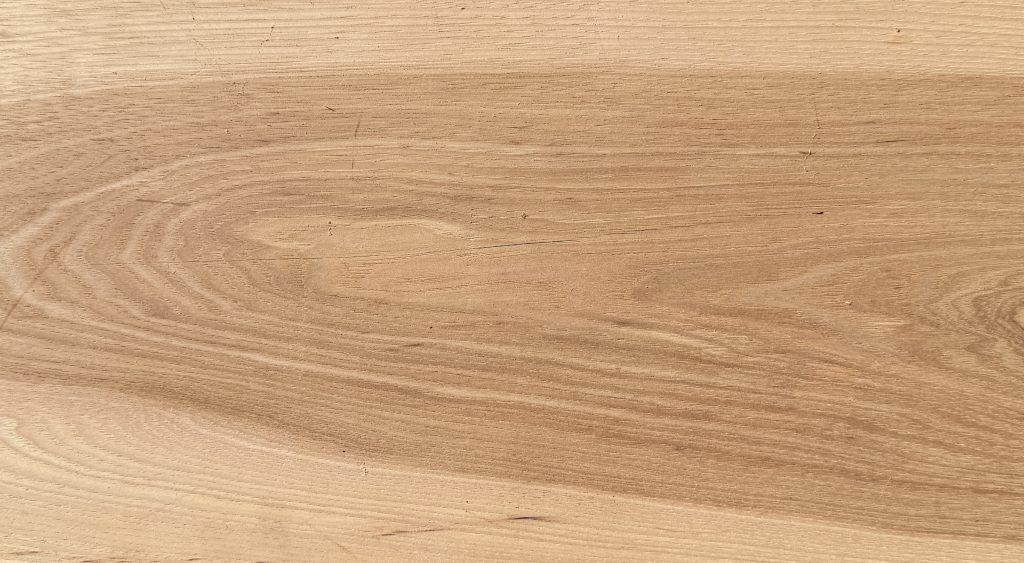
Hickory
Janka hardness: 1,880 lbf
One of the toughest woods in North America: harder than white oak or hard maple, and the classic choice for tool handles and wagon wheels. Light, creamy sapwood against reddish-brown heartwood gives it a bold, rustic contrast that’s sometimes called “calico.” Built for pieces that take a beating.
Elm
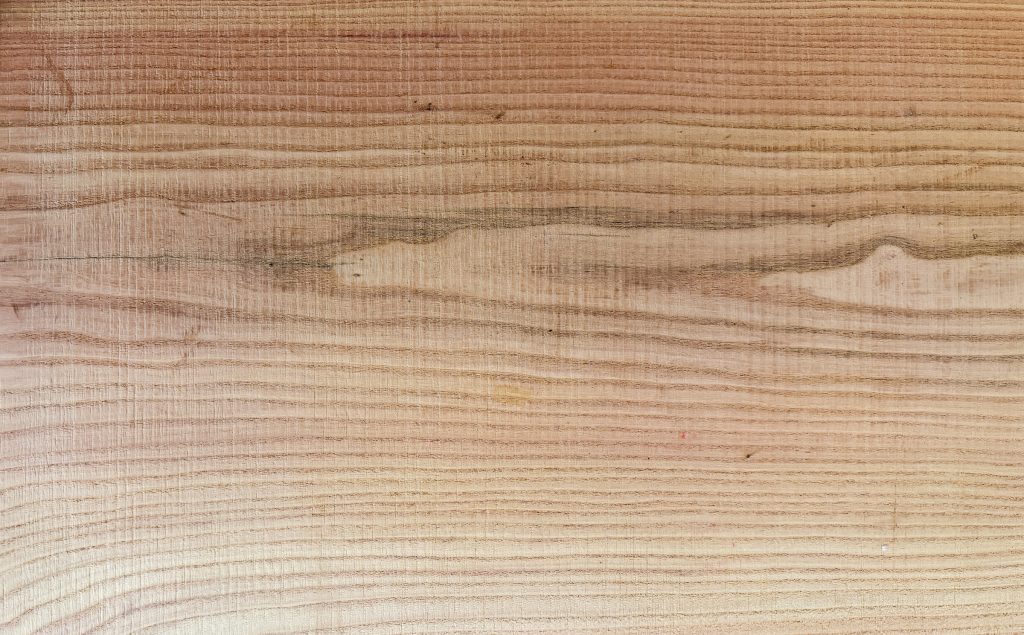
Red Elm
Janka hardness: 860 lbf
Also called slippery elm, native to the eastern U.S. and the Midwest. Elms once lined Main Streets across America until Dutch elm disease took most of the great trees in the 20th century, which makes good elm lumber a rare find today. Warm, light-to-medium reddish brown with pale sapwood and a wild, interlocked grain that resists splitting and bends beautifully with steam. Traditionally used for chair seats and bentwood furniture.
Cypress
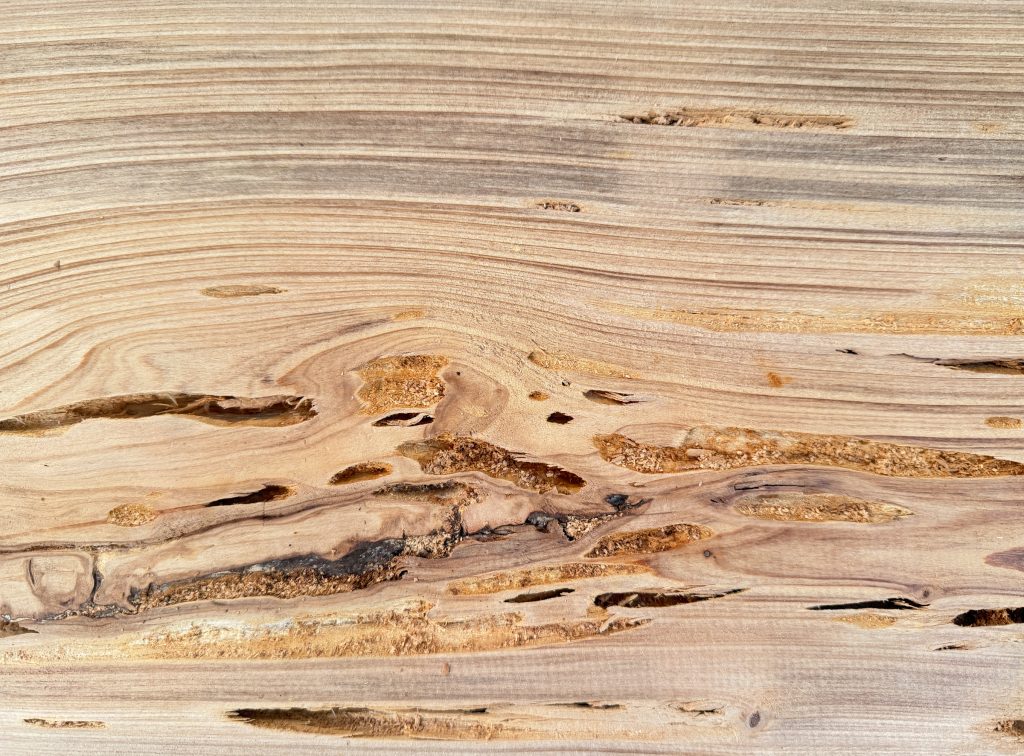
Pecky Cypress
Janka hardness: 510 lbf
Bald cypress from the Southeast, marked with pockets and channels left by a fungus while the tree was still standing. Soft, light and naturally rot-resistant, it brings a rustic, organic texture to accent pieces.
Exotic
Imported hardwoods.
Species from Central and South America, Africa, Asia and the Mediterranean, chosen for color, figure and character you won’t find at home.
Jatoba (Brazilian Cherry)
Janka hardness: 2,690 lbf
Native to Central and South America. Orange-brown to deep reddish brown with darker streaks and a natural luster, and it darkens with light. Nearly three times as hard as black walnut, it’s made for tabletops and pieces that see heavy use.
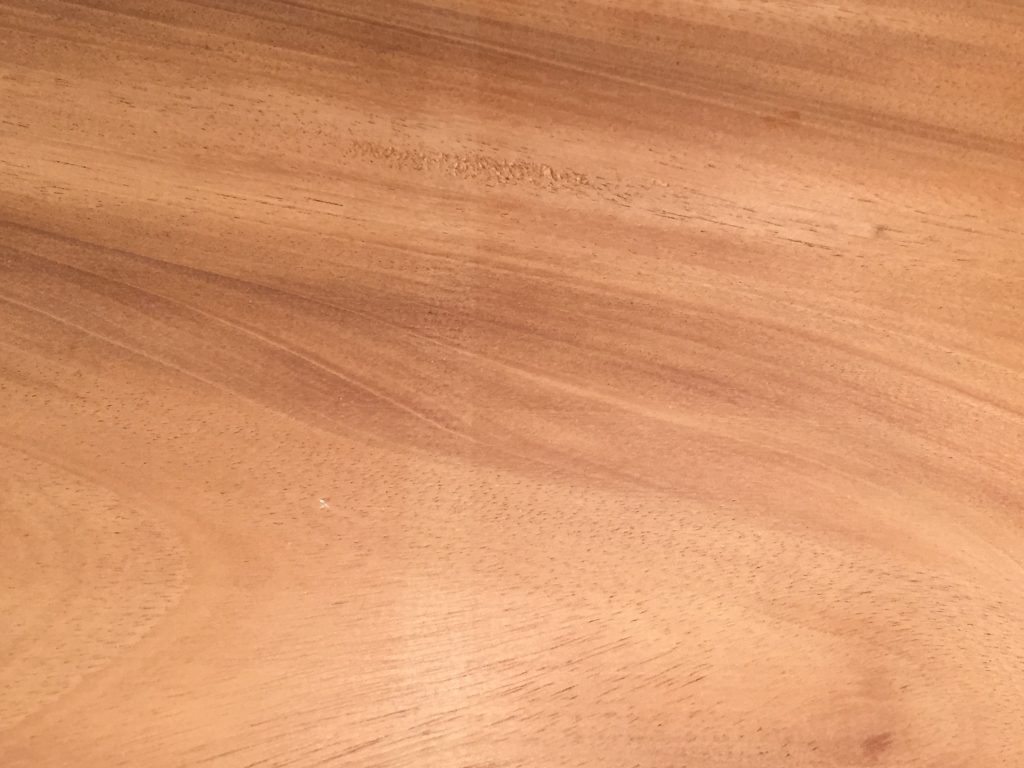
Sapele
Janka hardness: 1,360 lbf
An African relative of mahogany, golden to reddish brown and deepening with age. Quartersawn boards show a shimmering ribbon stripe, and figured boards can be quilted or fiddleback.
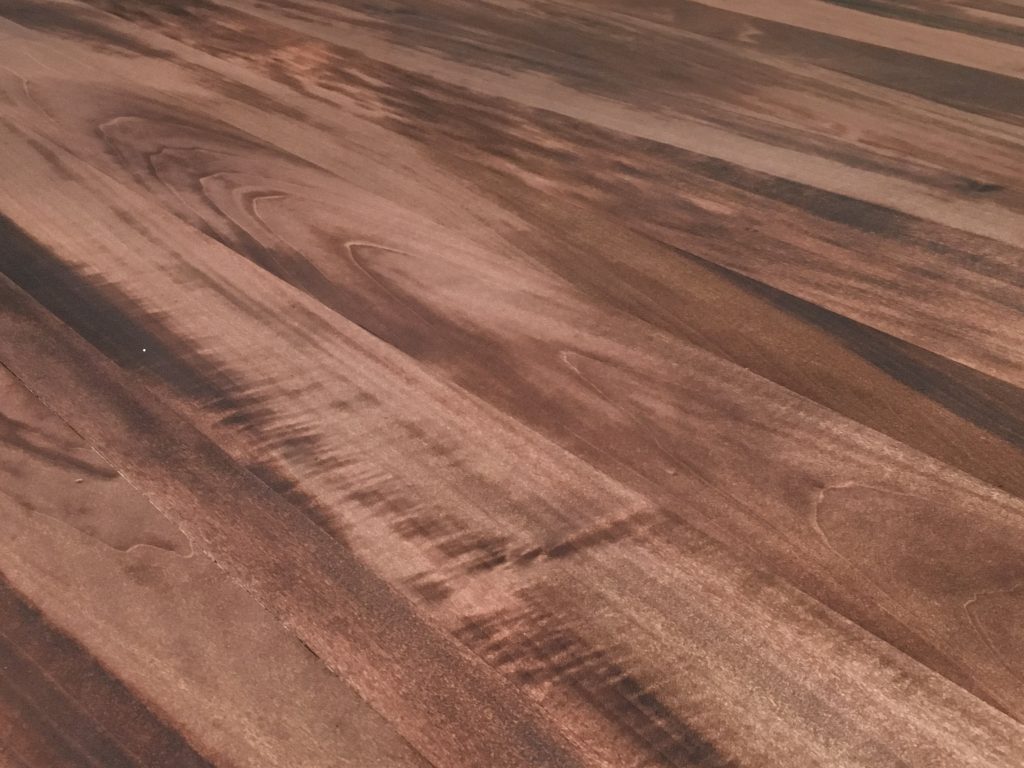
Mahogany
Janka hardness: 900 lbf
Genuine Honduran mahogany from Central and South America. Pinkish to reddish brown, darkening over time to a deep, classic red-brown. Stable, smooth and the traditional wood of fine furniture.
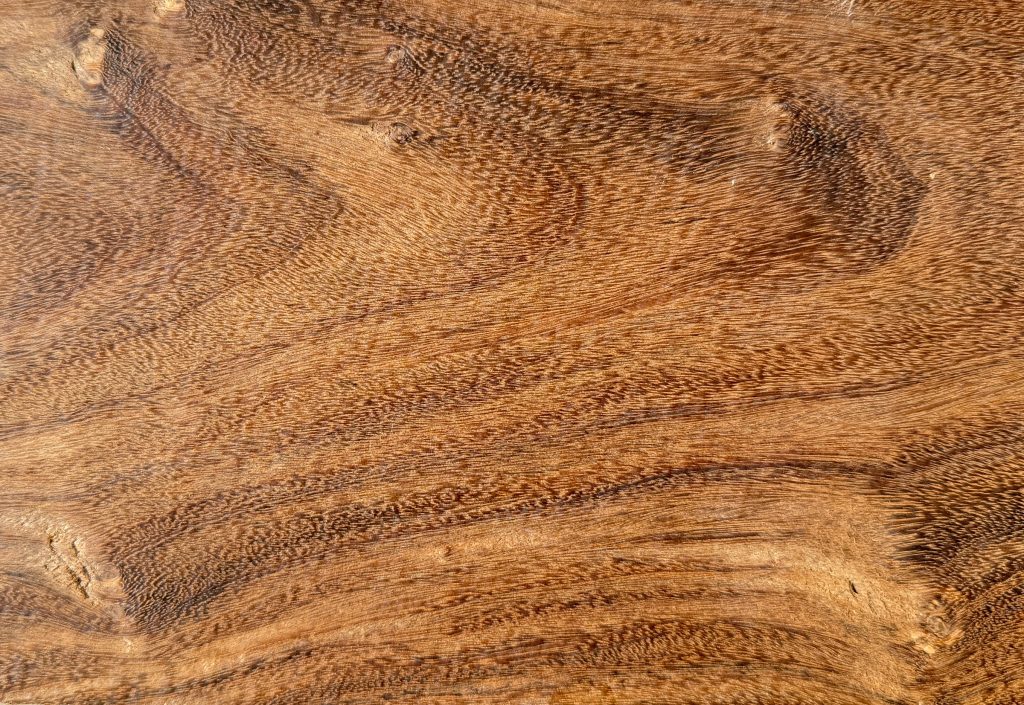
Coffee Wood
Janka hardness: about 3,000 lbf
Bolivian coffeewood, also sold as partridgewood or momoqui. Rich coffee-brown heartwood with darker streaks. Very dense and heavy, and one of the hardest woods we use.
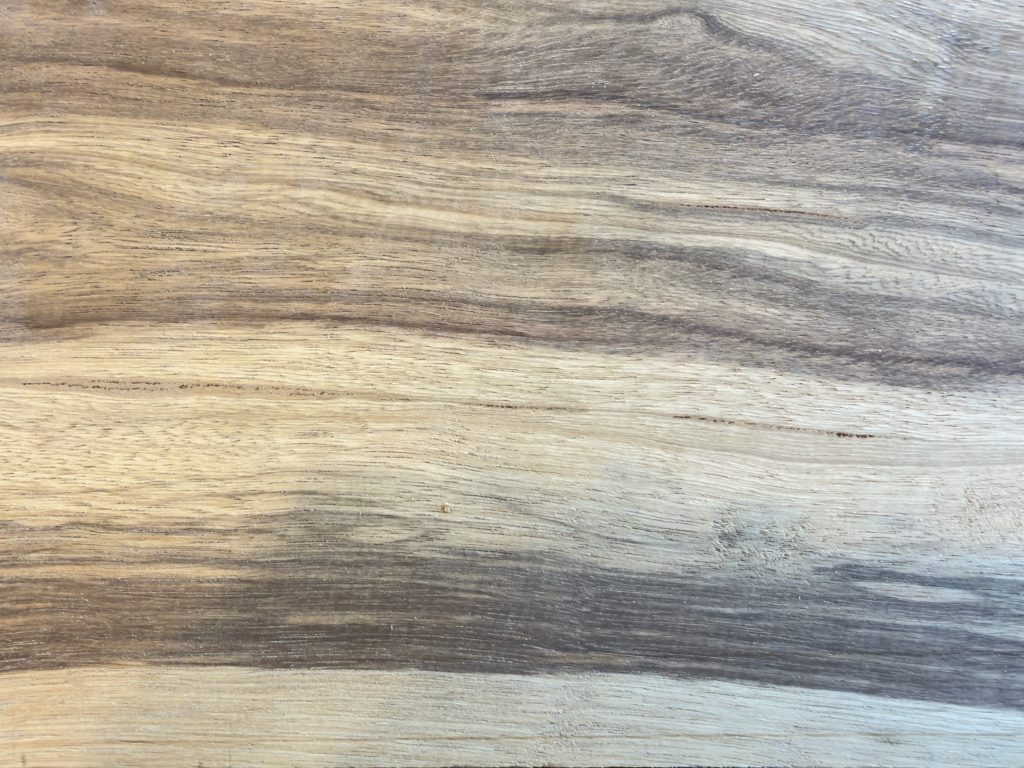
Black Limba
Janka hardness: 670 lbf
From West Africa. Light golden brown with dramatic gray-to-black streaks. “Black” limba is simply limba with this figure; plain boards are sold as white limba. Light, stable and easy to work.
Teak
Janka hardness: 1,070 lbf
Golden to medium brown, darkening with age, with natural oils that make it famously resistant to rot, moisture and insects. The gold standard for outdoor furniture and a mid-century icon indoors.
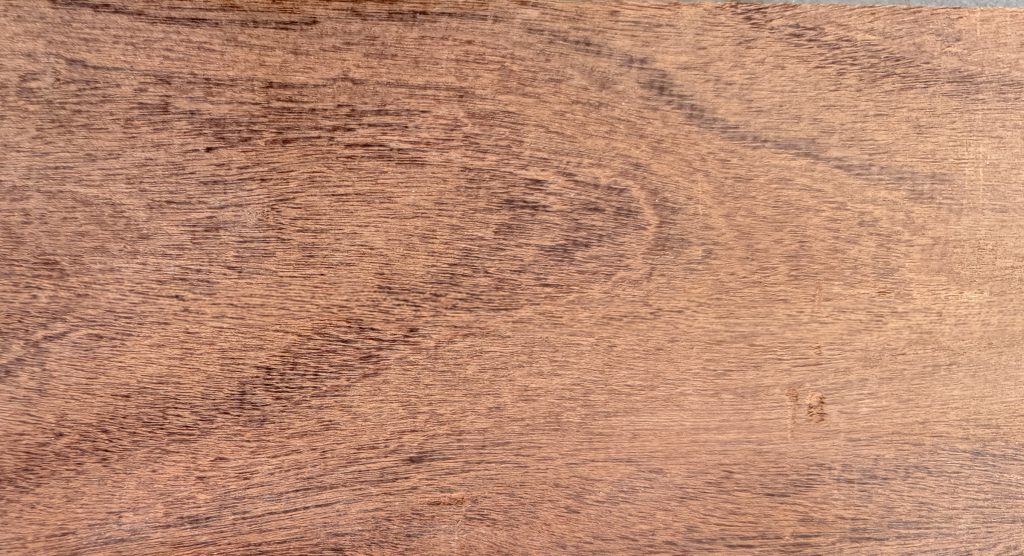
Afrormosia
Janka hardness: 1,570 lbf
Also called afromosia or African teak, from West Africa. Golden tan to light brown with darker stripes, it deepens over time toward the richness of walnut. It works much like teak without the oiliness, and it’s a little harder, making it a stable, handsome choice for furniture.
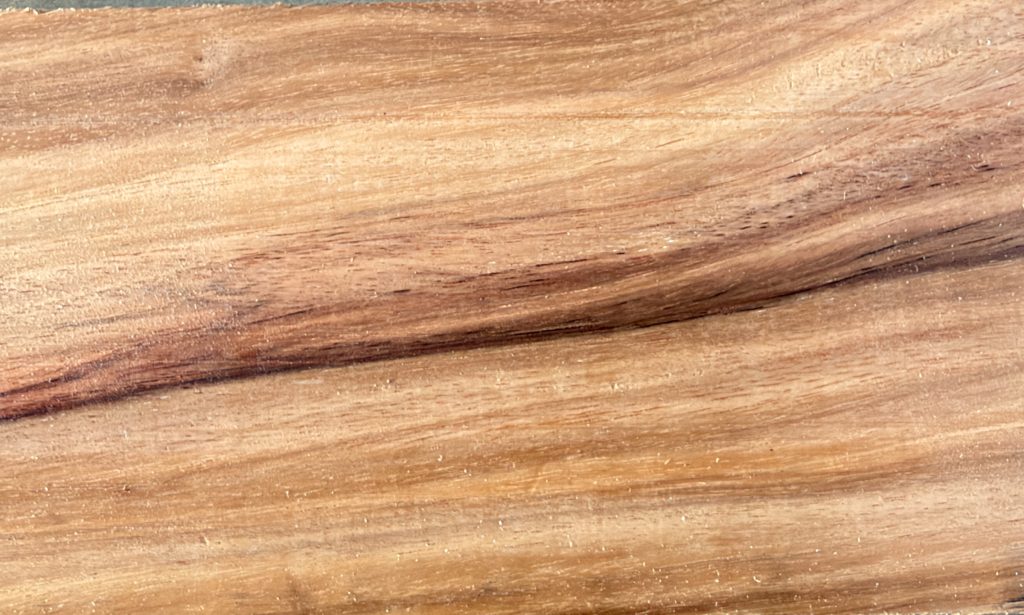
Canary Wood
Janka hardness: 1,520 lbf
From Central and South America. Yellow-orange to reddish brown with darker streaks, and some boards show a rainbow of reds, oranges and golds. The colors mellow and blend over time.
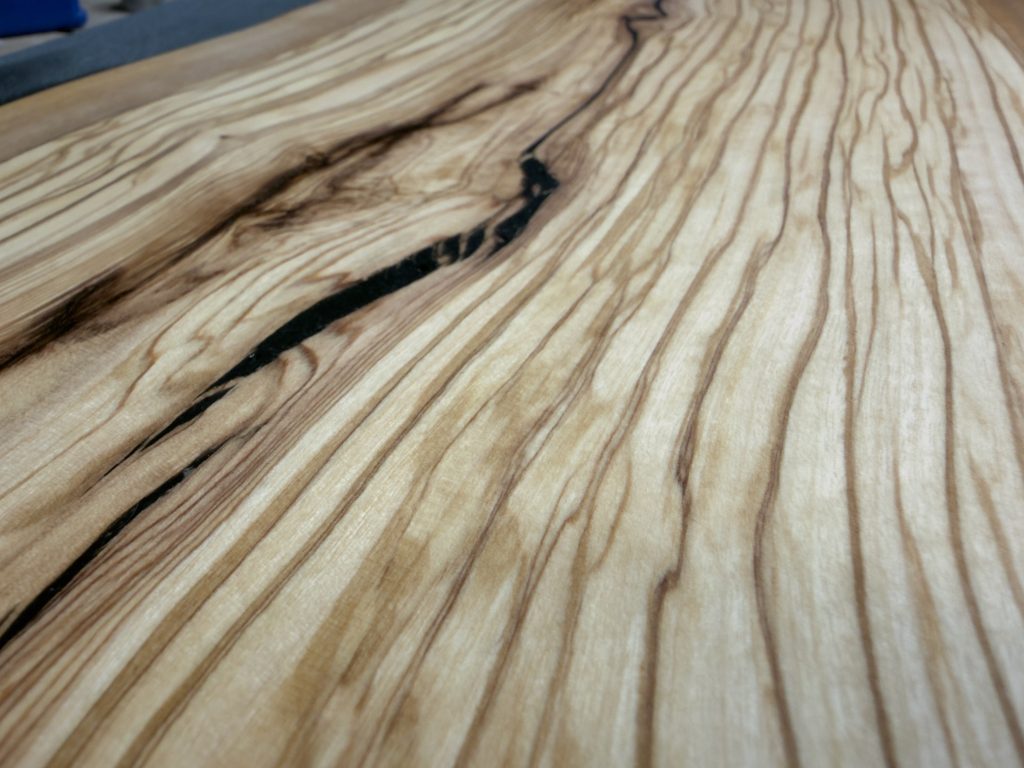
Olive Wood
Janka hardness: 2,710 lbf
Mediterranean olive, with yellow to light reddish-brown heartwood laced with dark, swirling veins, and a fruity scent while it’s worked. Dense, wild-grained and full of character, it’s ideal for smaller pieces and accents.
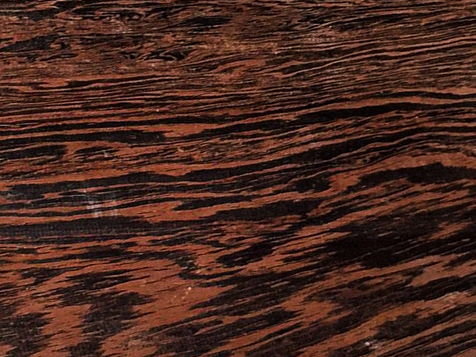
Wenge
Janka hardness: 1,930 lbf
From Central Africa. Deep chocolate brown to nearly black with fine, lighter streaks and a coarse, dramatic grain. Its dark, graphic look makes it a favorite for modern accents and contrast details.
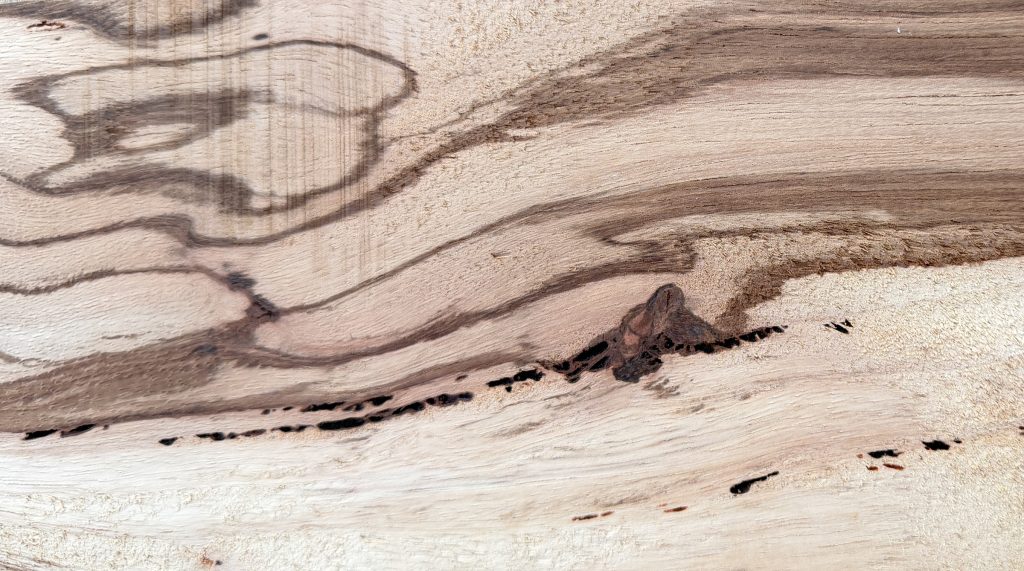
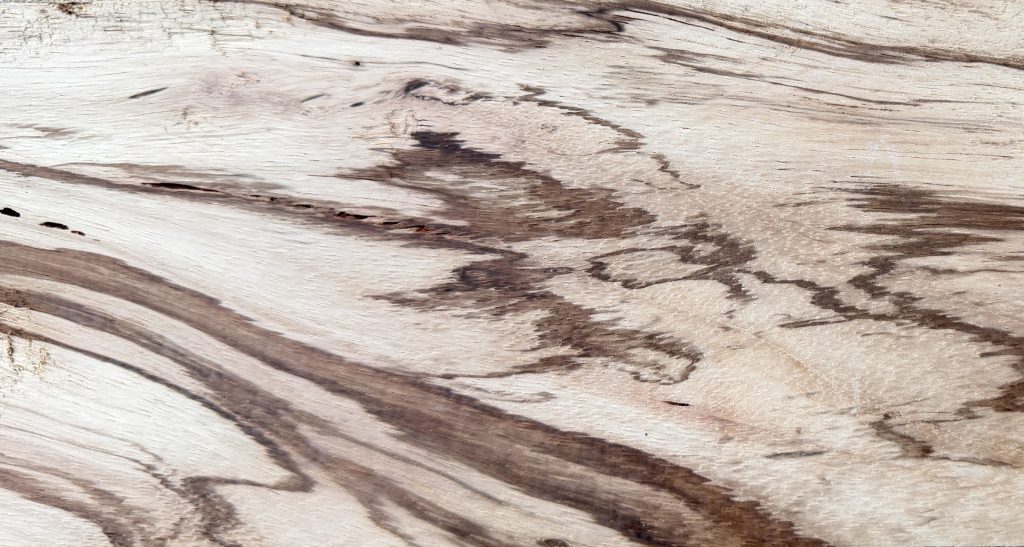
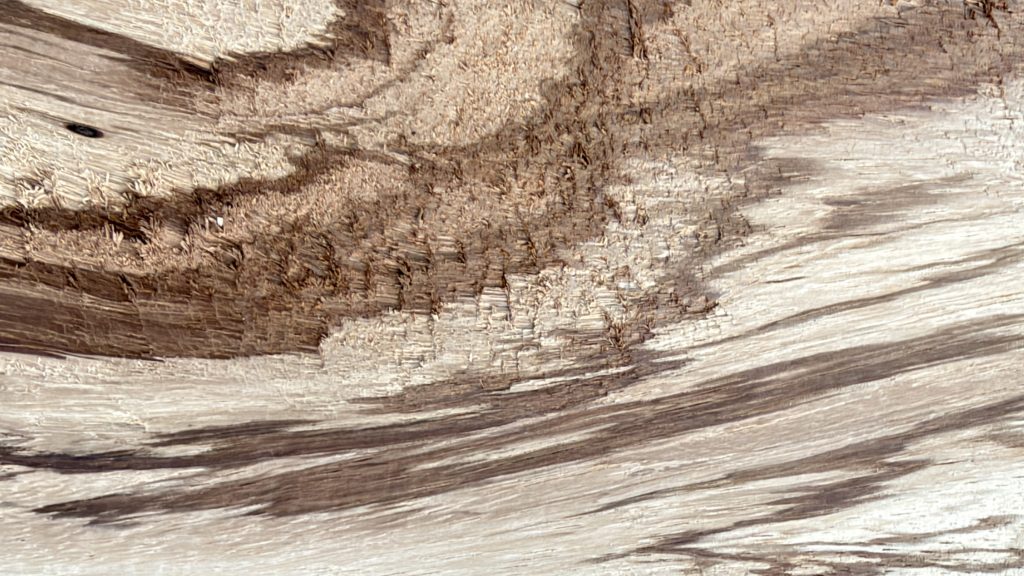
Zebrawood
Janka hardness: 1,830 lbf
From West Africa. Light, creamy brown with bold dark stripes, just as the name promises. Quartersawn boards show tight, even stripes, while flatsawn boards have wider, wilder patterns. A true statement wood.
Katalox
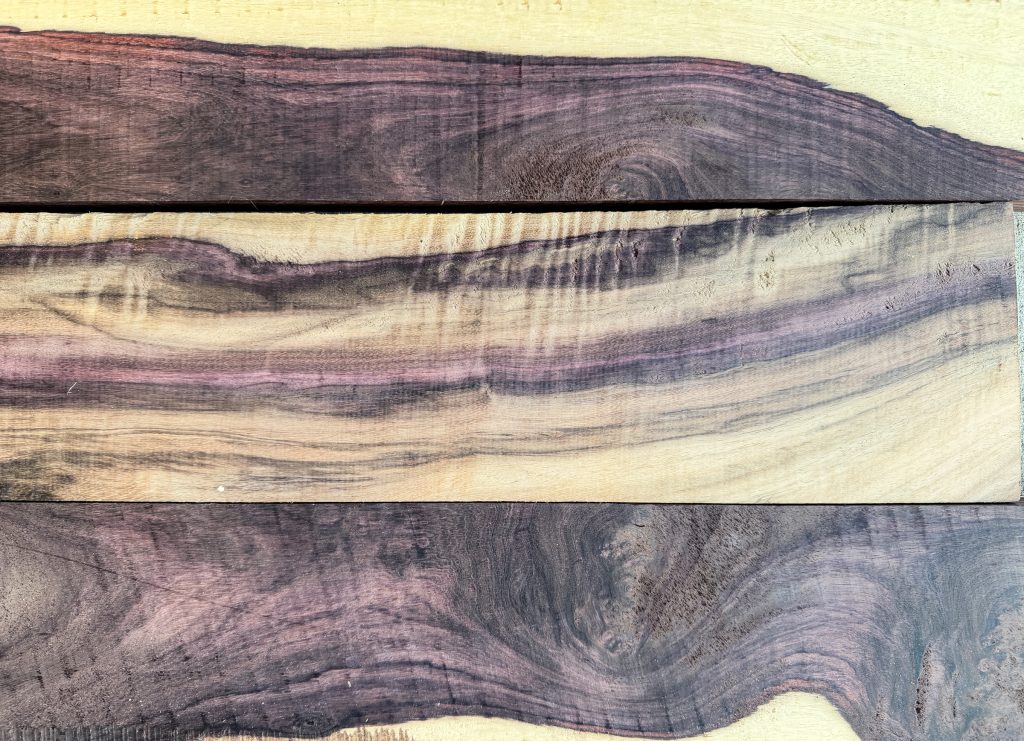
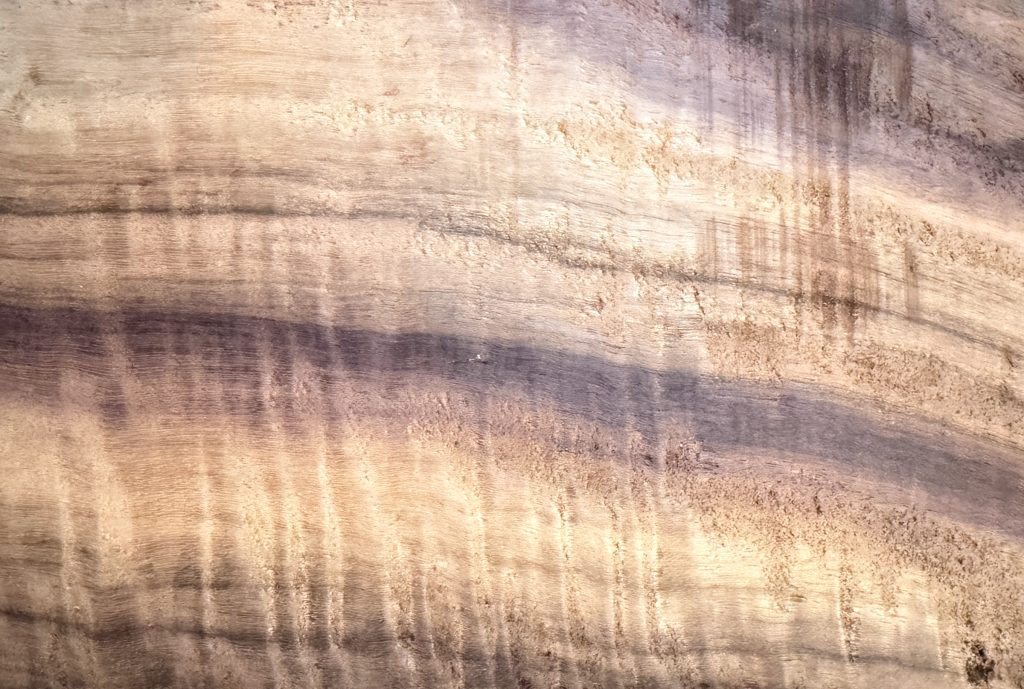
Janka hardness: 3,660 lbf
Also called Mexican royal ebony, from southern Mexico and Central America. Deep purple-brown to nearly black heartwood set against crisp, creamy sapwood, sometimes with a shimmering figure. One of the hardest woods we keep, it makes a striking accent wherever contrast is the point.
Padauk
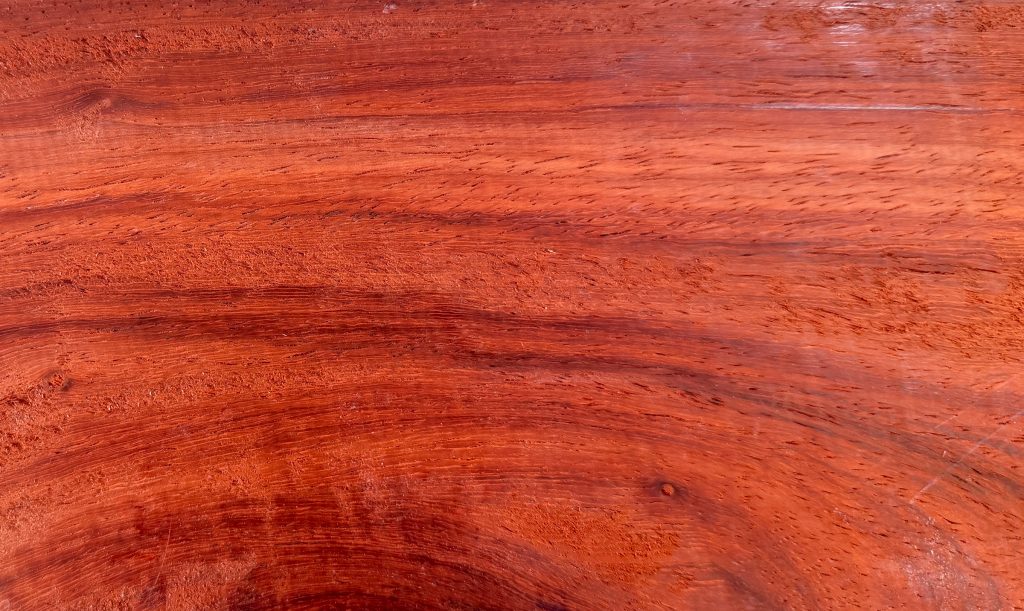
Janka hardness: 1,970 lbf
From Central and West Africa. Freshly cut, it’s a vivid reddish orange that’s hard to believe is natural, mellowing over time to a deep reddish brown. Hard, stable and a favorite for bold accents and contrast details.
Redheart
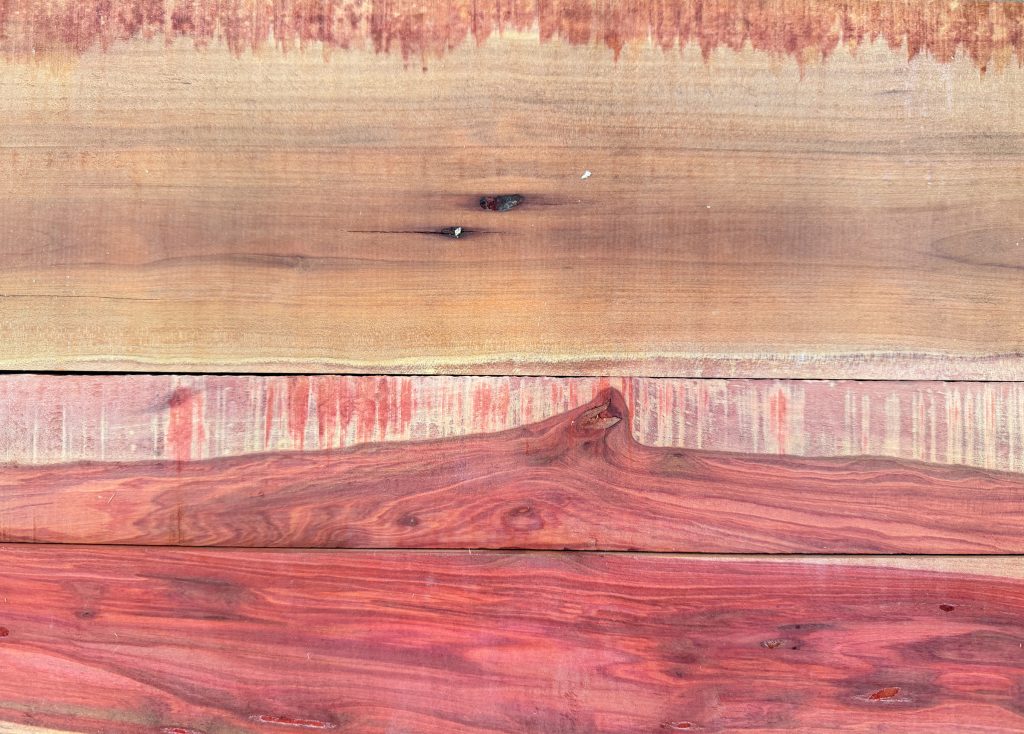
Janka hardness: 1,210 lbf
Also called chakte kok, from southern Mexico through Central and South America. Fresh boards show a bright watermelon red that softens toward reddish brown with time and light. A fine-grained, eye-catching accent wood.
Rosewood
The wood of the original Eames lounge chair and countless pieces of Danish modern furniture. Dense, richly colored and boldly figured, with tones that deepen beautifully over time.
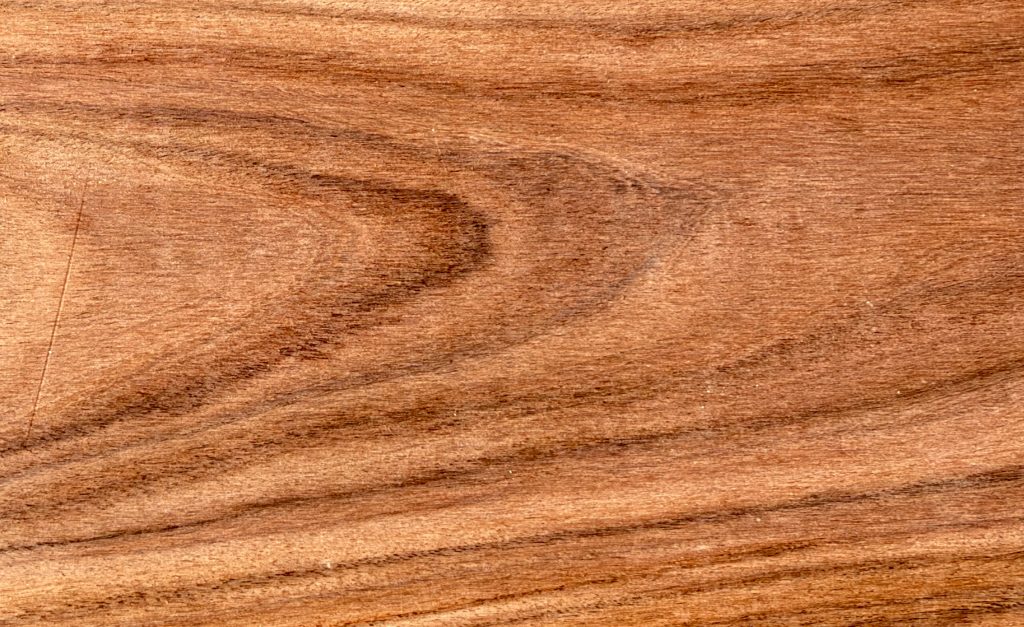
Caribbean Rosewood
Janka hardness: 2,400 lbf
Also known as chechen, from the Caribbean and Central America. It isn’t a true rosewood, but it’s every bit as striking: fiery reds, oranges and browns broken up by dark stripes, deepening with age.
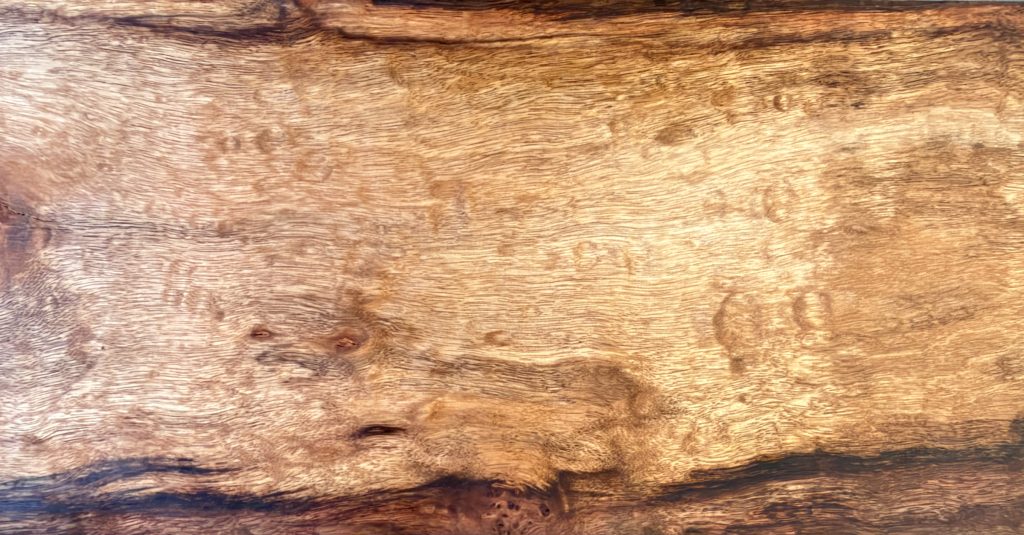
Caribbean Birdseye Rosewood
Janka hardness: 2,400 lbf
Caribbean rosewood with a rare birdseye figure: small, swirling eyes scattered through fiery orange, red and brown. Like birdseye maple, the figure is unpredictable and uncommon, and the color only deepens with age. A true showpiece for accents and small heirlooms.
Finish & care
Built to last for generations.
Every piece is sealed with low-VOC finishes that protect the wood and your home. A little care keeps it looking its best:
- Dust with a soft, dry cloth.
- Wipe up spills promptly and use coasters under drinks.
- Keep pieces away from heat vents and out of constant direct sun.
- Expect woods like cherry, jatoba and mahogany to deepen in color with light. That’s part of their charm.
Commissions
Every board has a piece waiting inside it.
We keep a curated selection of every species on this page, but the best boards don’t stay on the rack for long. Today’s slab of curly claro could be someone’s dining table by next month. Tell us which wood caught your eye, and we’ll share what we have on hand right now, then help you turn it into the piece it was meant to be.